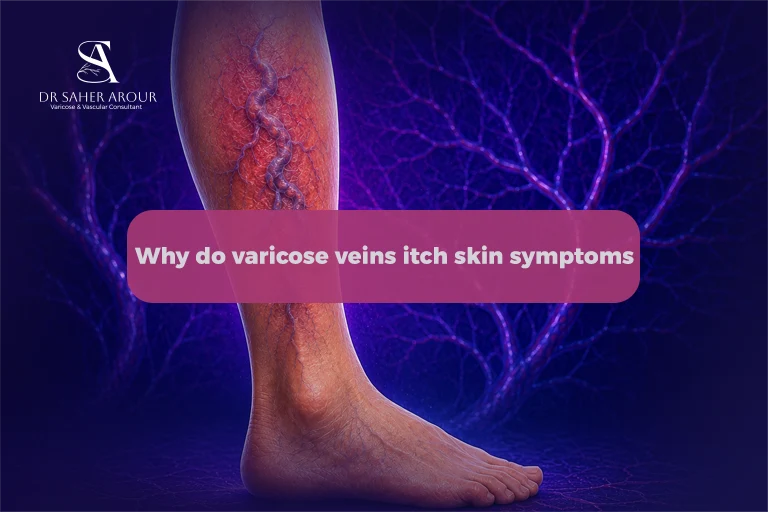
Varicose veins itch because increased pressure causes fluid to leak into surrounding tissues, triggering inflammation and skin irritation known as venous stasis dermatitis.
If your legs feel irritated and uncomfortable, you’re likely looking for clear answers. It helps to know that the majority of varicose veins are asymptomatic [1], meaning not everyone experiences this discomfort. But when you are searching for why do varicose veins itch skin symptoms, you’re dealing with a real, frustrating physical change that affects your daily comfort.
Medically Reviewed & Written by Dr. Saher Arour,
Board-Certified Vascular Surgeon
What happens on the surface of your skin is simply a reflection of the pressure building up inside your blood vessels. To understand these itchy veins in legs symptoms, we have to look beneath the surface to see how your veins are struggling to move blood effectively.
- Not all swollen veins cause itching, but when they do, it points to rising pressure inside the vein.
- The root cause is poor blood flow, not a simple surface skin allergy.
- Fluid building up in your lower leg tissues directly causes this irritation.
- Treating the skin alone won’t completely solve the deeper vascular issue.
Table of Contents
Why do varicose veins itch and what causes skin symptoms?
Varicose veins can cause itching due to increased pressure in the veins, a condition known as venous hypertension. When this high pressure persists, it forces fluid to leak out of the veins and into your surrounding tissues, triggering skin inflammation and irritation. We refer to this specific skin change as venous stasis dermatitis (a localized inflammation of the skin). If you want to understand how this fits into the broader picture of your health, our Varicose Vein Symptoms page offers a very helpful overview.
Itching is a recognized symptom associated with varicose veins [2]. According to the Edinburgh Vein Study, up to 19% of men and 25.3% of women suffer from itchy skin in the area affected by varicose veins [3]. You’re certainly not alone in feeling this intense urge to scratch your lower legs.
The vascular mechanism behind itchy varicose veins
Venous hypertension and blood pooling
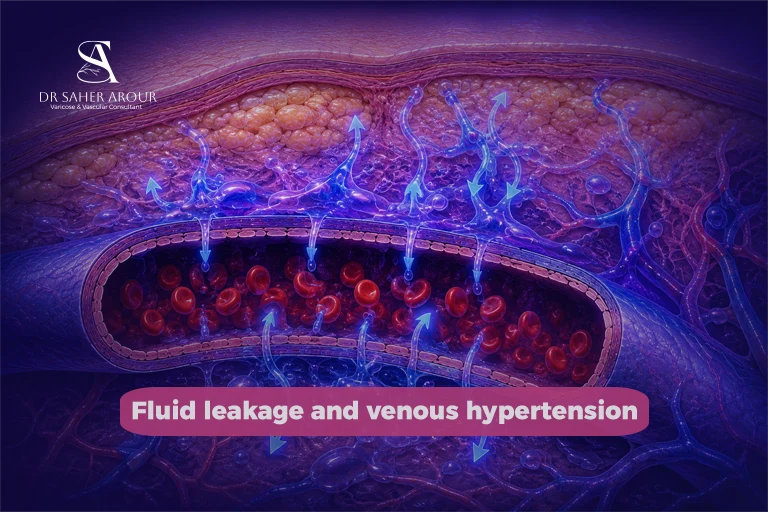
Healthy leg veins rely on tiny, one-way valves to push blood upward toward your heart. When these valves wear out or fail, the blood naturally flows backward with gravity. We know that incompetent valves with increased venous pressure lead to progressive dilation and tortuosity of the veins [4]. This valve inadequacy results in venous reflux [5], which simply means blood is pooling heavily in your lower legs.
This buildup creates immense internal stress. To understand why this happens, we look at specific vascular failures:
- Calf muscle pump failure: Venous hypertension is most often due to retrograde blood flow from calf muscle pump failure [6].
- Valve issues: The most common causes of this failure are incompetent venous valves, valve destruction, or venous obstruction [6].
- Chronic Venous Insufficiency (CVI): Venous reflux at the lower extremities causes venous hypertension, which leads to chronic venous insufficiency [6]. Ultimately, CVI involves venous hypertension causing pain, swelling, edema, skin changes, and ulcerations [4].
Fluid leakage into the skin (edema)
Think of your veins like a closed system under pressure. Because of this persistent high pressure, the walls of your veins are pushed to their absolute limits. Increased venous pressure leads to capillary leakage, resulting in edema of the surrounding tissues [4]. As this fluid escapes the blood vessels and settles beneath your skin, it causes visible swelling. This fluid accumulation contributes to local skin irritation [7], leaving your legs feeling tight, heavy, and exceptionally itchy.
Inflammatory response and histamine release
Your immune system immediately notices this leaked fluid and treats it as a problem that needs fixing. Ambulatory venous hypertension promotes microcirculatory changes, inflammatory responses, hypoxia, and venous wall remodeling [7]. Inflammation is a hallmark of chronic venous disease pathophysiology [8]. High venous pressure promotes inflammatory-cell accumulation and extravasation [6].
During this internal reaction, your body releases substances to fight the perceived threat. Here is how the process creates your symptoms:
| Internal Reaction | Clinical Consequence |
| The body releases defensive substances into the tissue. | Inflammatory mediators contribute to itching, medically known as pruritus [8]. |
| These mediators (including histamine) interact with local tissues. | Itching is actually associated with various inflammatory mediators in the tissue, not just histamine. |
That’s the real clinical answer behind your varicose vein itching causes.
Development of venous stasis dermatitis (varicose eczema)
When this inflammation sits in the skin for weeks or months, it fundamentally changes how your skin looks and behaves:
- Structural changes: Long-lasting inflammation links venous hypertension to skin changes in stasis dermatitis [6].
- Cutaneous manifestation: Stasis dermatitis is the cutaneous manifestation of venous hypertension caused by venous reflux [9].
- Symptom progression: Many common stasis dermatitis symptoms are caused by inflammatory processes [6], and pruritus is a common symptom of stasis dermatitis [9].
You can read more about how this specific condition develops in our detailed Venous Stasis Dermatitis Guide.
Common skin symptoms linked to varicose vein itching
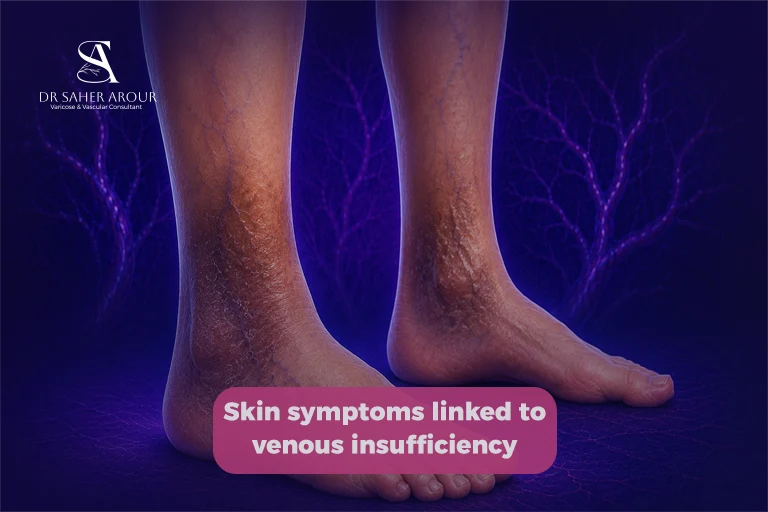
When you’re dealing with vein issues, the skin on your lower legs goes through several visible changes. The table below outlines exactly what to look for and how each symptom connects to the pressure inside your veins.
| Skin Symptom | Vascular Connection |
| Dry, scaly skin | Linked to skin barrier dysfunction. |
| Discoloration | Linked to hyperpigmentation from chronic venous insufficiency. |
| Tingling or burning | Associated symptom of varicose veins alongside itching. |
| Thickened skin | Linked to inflammation and fibrosis in advanced stages. |
Dry, irritated, or scaly skin
When you have venous stasis dermatitis itching, your skin physically loses its natural moisture. Skin barrier dysfunction and dryness contribute to itching [9], leaving a rough, scaly texture around your lower legs and ankles.
Redness and discoloration
Over time, the chronic high pressure starts affecting your skin color. Chronic venous insufficiency leads to hyperpigmentation [4]. You’ll often notice brown changes around the ankles, permanently replacing your normal skin tone if the veins remain untreated.
Burning or tingling sensations
Patients often ask me why veins itch and burn at the same time. Medical data confirms that tingling is a recognized symptom associated with varicose veins [2]. The ongoing inflammation irritates the superficial nerves in your skin, forcing them to send these mixed, highly uncomfortable signals.
Thickened skin
In more advanced cases, the skin begins to feel hard and leathery to the touch. This condition, called lipodermatosclerosis, involves inflammation and fibrosis [9]. It’s a clear warning sign that the vascular problem has been damaging the tissue for a significant amount of time.
Why varicose veins itch more at night
You might notice your legs bother you the most right when you’re trying to sleep, leaving you wondering why varicose veins itch at night. There isn’t a unique nighttime mechanism suddenly activating in the dark. Instead, symptoms worsen with prolonged standing [6] throughout the day. By the time you finally sit down or get into bed, the fluid accumulation and venous pressure have reached their absolute peak, making the irritation feel overwhelmingly intense.
Risk of complications if itching is ignored
Skin breakdown and scratching-related injury
When you constantly scratch varicose eczema itchy legs, your fragile skin can easily break. Constant friction weakens an already compromised skin barrier, leading to sharp pain and tiny, hard-to-heal wounds.
Venous ulcers
If the underlying venous pressure isn’t safely resolved, the skin damage can quickly escalate. Chronic venous disease can progress to venous ulcers [4]. Venous ulcers involve inflammation and hypoxia [7], which means the surrounding tissue simply lacks enough oxygen to heal itself properly.
Infection risk from open skin
Any break in your skin, especially in areas struggling with poor circulation and ongoing inflammation, drastically increases the chance of bacteria entering. This makes gentle, protective skin care absolutely vital to prevent a localized infection.
Relief strategies for itchy varicose veins
Finding relief for itchy varicose veins involves addressing both the surface skin irritation and the blood flow problem trapped underneath.
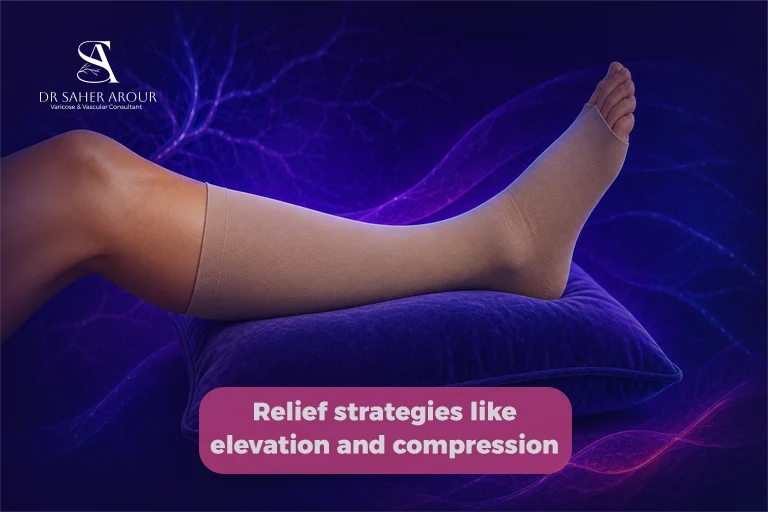
I always recommend these practical steps to my patients.
- Wear compression garments daily to support your veins.
- Raise your legs above your heart level when resting to drain fluid.
- Apply gentle, unfragranced moisturizers to protect your skin barrier.
- Consult a specialist for targeted vein treatments if symptoms persist.
Compression stockings
Medical compression improves venous return and reduces symptoms [4]. By gently squeezing your lower leg, these stockings help those incompetent valves push blood back up toward your heart, directly reducing the pooling that triggers the itch in the first place.
Elevating the legs
Simply putting your feet up makes a massive difference. Leg elevation reduces venous pressure and can alleviate symptoms [4]. It uses gravity to securely drain the heavy fluid away from your irritated skin.
Moisturizers for dry skin
Because skin barrier dysfunction and dryness contribute to itching [9], using a high-quality moisturizer helps soothe the fragile surface of your skin and prevents painful cracking.
Topical treatments
Sometimes specialized creams are needed for varicose vein skin irritation treatment. Topical treatments relieve symptoms but do not treat the underlying cause [9]. They calm the inflammation locally, giving you a temporary, much-needed break from the constant urge to scratch.
When to consider medical treatment
If elevating your legs and wearing compression stockings aren’t enough, procedural treatment may be required to address venous reflux [4]. You can confidently explore our Varicose Vein Treatment Options to see exactly how we safely close off the faulty valves themselves.
When to see a vascular specialist
Don’t ignore the itch if it starts turning into pain or open sores. You should seek medical evaluation if your symptoms are persistent, worsening, or associated with skin changes or open sores. We perform a simple, painless ultrasound to see exactly where the pressure is coming from, allowing us to plan a safe correction strategy before serious complications develop.
FAQ
Why do varicose veins itch at night more than during the day?
Itching may feel worse at night due to fluid buildup from prolonged standing and reduced distraction, rather than a unique nighttime mechanism.
Are itchy varicose veins a sign of a serious condition?
They can indicate venous stasis dermatitis or chronic venous insufficiency, which may require medical evaluation if persistent.
Can scratching varicose veins cause damage?
Yes, scratching can break the skin and increase the risk of infection or ulcer formation.
What is the best treatment for itchy varicose veins?
Relief includes compression, skin care, and addressing the underlying venous insufficiency when needed.
Do all varicose veins cause itching?
No, not all varicose veins cause itching; symptoms vary depending on severity and skin involvement.
Can treating varicose veins reduce itching symptoms?
Yes, treating the underlying venous problem often improves symptoms, but results can vary between individuals.
References
- [1] https://medscidiscovery.com/index.php/msd/article/view/904
- [2] https://www.bmj.com/content/318/7180/353
- [3] https://jphcs.biomedcentral.com/articles/10.1186/s40780-017-0095-7
- [4] https://www.ahajournals.org/doi/10.1161/CIRCULATIONAHA.118.037915
- [5] https://journals.sagepub.com/doi/10.1177/20503121221118992
- [6] https://link.springer.com/article/10.1007/s13555-023-00931-2
- [7] https://www.mdpi.com/2077-0383/10/15/3239
- [8] https://pubmed.ncbi.nlm.nih.gov/29292192/
- [9] https://link.springer.com/article/10.1007/s40257-023-00761-1