When patients ask what is a TIA, transient ischemic attack, in simple terms, I answer by telling them that it is a medical emergency that gives you a critical second chance. Medically, it is a transient episode of neurologic dysfunction caused by focal brain, spinal cord, or retinal ischemia without acute infarction or tissue injury [1]. In clear language, this means a TIA feels exactly like a stroke while it is happening, but the symptoms go away on their own. However, passing symptoms never mean the danger has safely passed, because a TIA is a serious warning sign of a future stroke [2].
If you experience these frightening signs, you might ignore them or simply try to rest. But as a vascular surgeon, I assure you that immediate action is your safest choice. This is a critical message from your body, giving you a real chance to stop a permanent injury before it happens. To understand why this urgency matters, here is what happens during a TIA:
- The right treatment can drop your risk of a major stroke.
- There is a temporary disruption of blood flow to your brain.
- The symptoms may last only a few minutes before going away completely.
- We need to examine you urgently to find exactly where the problem started.
Table of Contents
The Direct Answer: What Is a TIA Exactly ?
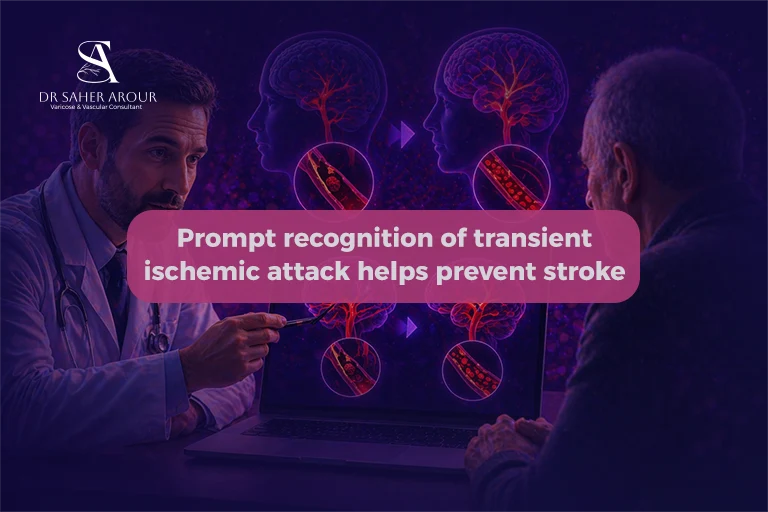
A TIA and ischemic stroke have the same underlying mechanism: a disruption of cerebral blood flow [1]. This happens when a small clot or a narrowed blood vessel briefly stops oxygen from reaching a specific part of the brain. The tissue becomes starved of blood, which immediately triggers neurological symptoms. Because the blockage breaks apart or clears quickly on its own, blood flow is restored before the brain tissue dies. This is exactly why patients return to normal shortly after the event begins.
TIA Symptoms: What It Feels Like When It Is Happening
A TIA can be very scary because it occurs suddenly without any prior warning. Common transient ischemic attack symptoms include weakness, numbness or paralysis in your face, arm or leg, typically on one side of your body, slurred or garbled speech or difficulty understanding others, and blindness in one or both eyes or double vision [3]. Please do not ignore these signs, even if they begin to fade while you are noticing them.
Symptoms That Resolve Completely Within Minutes to Hours
What makes a TIA so confusing is how fast it ends. A TIA typically lasts less than an hour, more often minutes [4]. Because the blockage clears on its own, blood flow returns before the brain tissue is damaged. This quick recovery makes people assume the problem is gone. However, just because you feel fine again does not mean you are out of danger.
Symptoms That Are Most Commonly Missed or Dismissed
Because these episodes are often very short, patients frequently mistake them for a migraine, fatigue, or simply feeling unwell. Numbness in a single arm or a brief moment of slurred speech might be ignored if it clears up in ten minutes. However, ignoring these short warning signs can delay life-saving medical evaluations. Any sudden change in your speech, vision, or muscle control needs to be checked quickly by a doctor.
TIA vs Full Stroke: The Key Differences
Understanding the TIA vs stroke difference helps clarify why doctors treat both with the same initial urgency. A TIA and an ischemic stroke share the same underlying mechanism: a disruption of blood flow to the brain [1]. They both begin when a clot or a narrowed blood vessel stops oxygen from reaching a specific part of the brain, starving the tissue and immediately triggering neurological symptoms. The critical difference is what happens next.
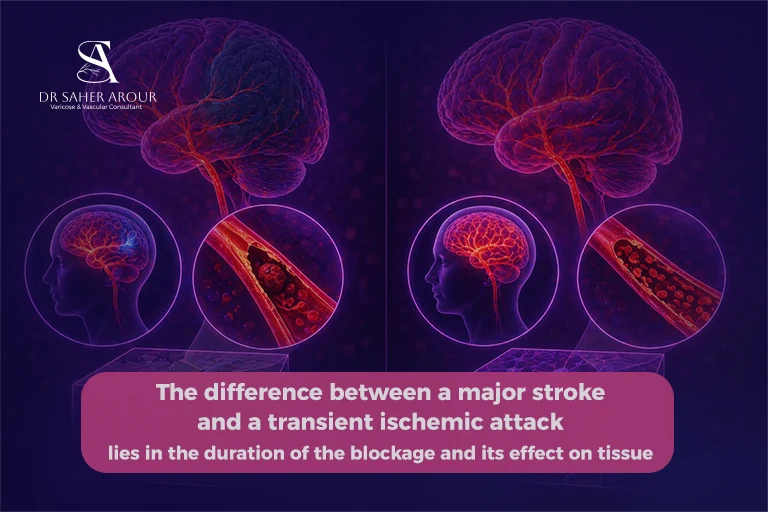
A TIA differs from a stroke in that the blockage is brief, and there is no permanent brain damage [2]. In contrast, a full stroke occurs when the blood supply remains blocked long enough to cause tissue death.
Modern imaging helps us confirm this distinction. Medically speaking, resolved symptomatology with infarction on a diffusion-weighted MRI (a highly detailed brain scan) is consistent with ischemic stroke [4]. This means if your symptoms fade but an advanced MRI scan shows a spot of permanent tissue injury, this will be medically considered as a small stroke rather than a TIA. If you want to learn more about the complete clinical picture of strokes, please read our guide on Brain Stroke: Causes, Warning Signs & Recovery.
Why a TIA Is a Medical Emergency: The 48-Hour Stroke Risk
My personal advice is to never wait to see your doctor the following week if you suspect you had a mini stroke. Stroke risk is particularly high within the first 48 hours following a TIA [1]. The clot that caused the brief blockage may be a warning that a much larger, more stable clot is about to travel to the brain. This is exactly why TIA treatment urgency is so high.
The encouraging news is that prompt medical attention changes outcomes dramatically. Up to 80 percent of strokes after a TIA may be preventable [5]. By acting quickly, your medical team can step in and protect your brain.
The ABCD2 Score: How Doctors Assess Risk After TIA
In the past, medical guidelines relied on a tool called the ABCD2 score TIA to estimate the risk of a future stroke. While doctors used this scoring system for a long time to decide how quickly a patient needed to be seen, our medical understanding has changed. Because we now know the early stroke risk is very high for all TIA patients, we recommend urgent assessment for everyone, rather than relying only on a number score
What Causes a TIA: The Most Common Sources
To prevent a future stroke, we must find exactly where the initial blockage came from. The problem usually starts in blood vessels supplying the brain or the heart itself.
Carotid Artery Stenosis: One of the Most Treatable Causes
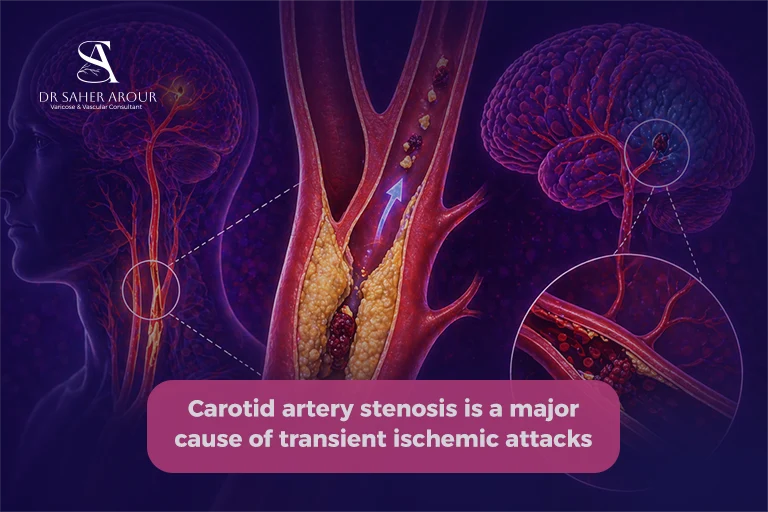
The arteries in your neck are major pathways for blood traveling to your brain. Carotid artery narrowing, often due to atherosclerosis, is an important cause of TIA [6]. Plaque buildup can block the blood flow or break open, sending small clots upward. If your tests reveal a severe carotid stenosis TIA, specialized surgical or minimally invasive treatments can clear the pathway safely.
Atrial Fibrillation and Cardiac Embolism
The heart’s rhythm plays a major role in preventing clots. Atrial fibrillation can cause a TIA because it can form blood clots that travel from the heart to the blood vessels supplying the brain [6]. When the heart beats irregularly, blood can pool and thicken in its chambers. If a tiny piece of that clot breaks free, it follows the bloodstream directly to the cerebral arteries.
What Happens in Hospital After a TIA Is Suspected?
When you arrive at the emergency department, the medical team will work hard to find out exactly what caused the attack and check the health of your blood vessels. Tests after TIA are used to identify the cause, detect conditions that increase clot risk, and help confirm whether the event was a TIA rather than a stroke or another mimic [7]. These TIA diagnosis tests generally include brain imaging scans, vascular ultrasounds of your neck arteries, heart rhythm monitoring, and detailed blood tests.
Preventing the Full Stroke After a TIA
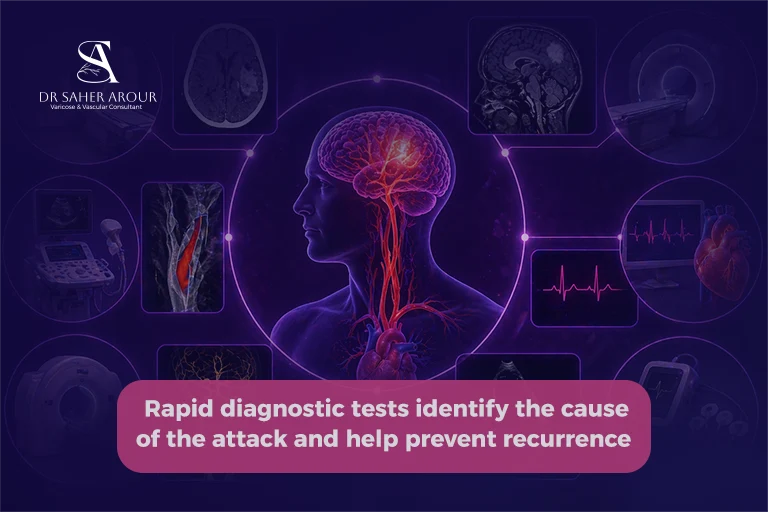
Once we know what caused your TIA, our goal mainly becomes making sure it never happens again. Treatment after a TIA aims to reduce the risk of stroke, heart attack, or further TIAs [7]. Your personalized care plan may involve blood-thinning medications, cholesterol management, blood pressure control, or procedures to address narrowed arteries. A successful mini stroke recovery means closely following this personalized plan to protect your brain and give you peace of mind for the future.
Frequently Asked Questions
What is a TIA transient ischemic attack in simple terms?
A transient ischemic attack, or TIA, is a temporary blockage of blood flow to the brain that causes stroke-like symptoms but does not leave lasting brain injury on imaging. It is still a medical emergency and should never be ignored.
How is a TIA different from a full stroke?
The TIA vs stroke difference is that TIA symptoms go away completely, often within minutes and usually within an hour, while a full stroke causes lasting brain injury. But the warning risk after a TIA is very real.
What are the most common transient ischemic attack symptoms?
Common transient ischemic attack symptoms include sudden weakness, numbness, speech difficulty, vision loss, facial droop, or dizziness. Even if symptoms disappear, urgent assessment is needed.
How high is the stroke risk after TIA?
Stroke risk after TIA is highest in the first 48 hours, which is why TIA treatment urgency matters. A TIA should be treated as a same-day emergency.
What tests are done to diagnose a TIA?
TIA diagnosis tests may include brain imaging, blood pressure and heart rhythm checks, blood tests, and scans of the carotid arteries. The goal is to find the cause quickly and reduce stroke risk.
Can carotid stenosis or atrial fibrillation cause a TIA?
Yes. Carotid stenosis TIA and atrial fibrillation are both important causes because they can send clots or reduce blood flow to the brain. Identifying the source changes treatment and prevention.
References
[2] TIA (Transient Ischemic Attack)
[3] Transient ischemic attack (TIA) – Symptoms and causes
[4] Definition and Evaluation of Transient Ischemic Attack
[5] A TIA is a warning that often leads to a stroke
[6] Causes – Transient ischaemic attack (TIA)[7] TIA (Transient Ischaemic Attack)