Catheter-Based Varicose Vein Treatment
If you are struggling with varicose veins, there is now a modern solution without the need for traditional surgery.
Catheter-based treatment for varicose veins is one of the latest, safest, and most effective medical approaches available today. Using advanced minimally invasive technologies, this procedure delivers excellent clinical outcomes with minimal discomfort and rapid recovery.
Procedure Overview
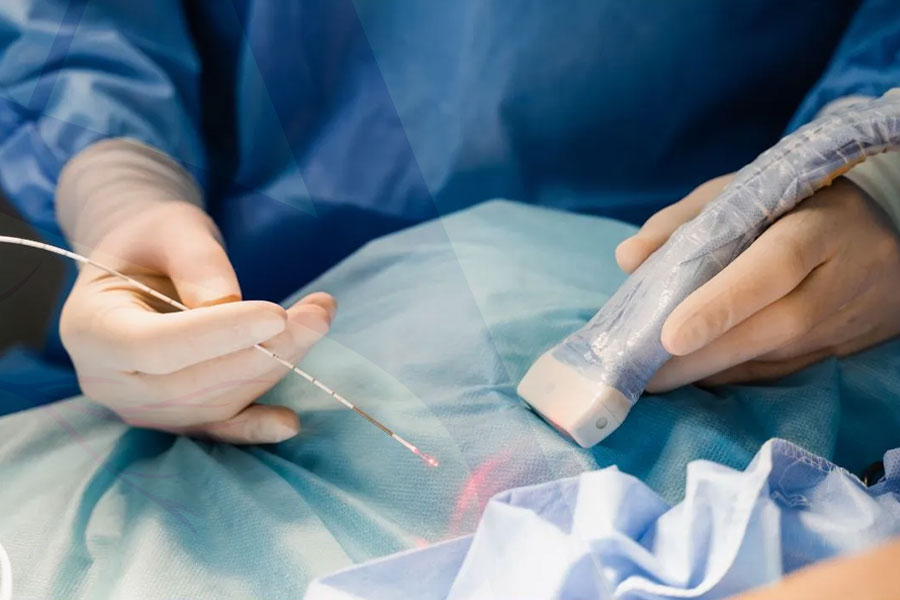
During the treatment, a thin catheter is precisely guided into the affected vein. Through this catheter, either laser energy or radiofrequency waves are applied to seal the damaged vein from within.
As a result, varicose veins gradually fade, the overall appearance of the legs improves, and symptoms such as pain, heaviness, and swelling are significantly relieved.
Catheter-Based Varicose Vein Treatment Clinical Benefits
01
Safe and highly effective results without traditional surgery
02
Minimal pain and swelling with no surgical incisions
03
Short recovery time. Resume normal activities the same or the next day
04
Long-lasting results by permanently closing malfunctioning veins
Who Can Benefit from Catheter-Based Varicose Vein Treatment?
This procedure is suitable for patients with:
- Superficial varicose veins causing pain or itching
- Reticular veins (blue or red spider-like veins)
- Deeper venous insufficiency that may lead to complications such as blood clots
- Patients seeking a non-surgical alternative or those unfit for conventional surgery
Catheter-Based Varicose Vein Treatment Steps
01
Medical Assessment
- A detailed duplex ultrasound scan is performed to accurately map the affected veins.
02
Preparation
- The treatment area is sterilized. Only local anesthesia is required—no general anesthesia needed.
03
Catheter Insertion
- A very small entry point is made to insert the catheter into the vein.
04
Vein Closure
- Laser or radiofrequency thermal energy gently seals the damaged vein.
05
Post-Procedure
- Patients can walk immediately after the session and return to daily activities.
Why Choose Dr. Saher Arour for
Catheter-Based Varicose Vein Treatment?
Dr. Saher Arour is one of the leading vascular surgeons in the Gulf region, with over 25 years of experience in vascular and endovascular procedures.
He combines international medical credentials, cutting-edge technologies, and individualized treatment plans to ensure every patient receives safe, precise, and effective care.
You’re not just getting a procedure. You’re getting expert hands and evidence-based medicine.
After Treatment
- Fast Results: Varicose veins begin to shrink and fade progressively after the session, with noticeable improvement in both comfort and appearance within weeks.
- Quick Recovery: No extended downtime is required. Most patients return to work and normal life the same day or the next day.
Post-Procedure Instructions
- Walk immediately after treatment
- Avoid strenuous activities or prolonged standing for a few days
- Compression stockings may be recommended for a short period
- Mild discomfort can be managed with light pain relievers as advised by your physician
Frequently Asked Questions
1. Do varicose veins completely disappear after the catheter-based varicose vein treatment?
Yes. In most cases, veins fade gradually over weeks.
2. Can varicose veins come back?
Recurrence rates are very low when diagnosis and treatment are performed accurately.
3. Is the catheter-based varicose vein treatment painful?
No. It is done under local anesthesia. Patients typically feel only mild warmth or pressure.
4. Do I need compression stockings?
Sometimes, for a short period, but not always necessary.
5. Can I return to work immediately after catheter-based varicose vein treatment?
Yes. Most patients resume normal activities the same or the next day.
6. Is special preparation required for catheter-based varicose vein treatment?
No major preparation. A duplex ultrasound is required beforehand, and certain medications may be adjusted if needed.