
If you have been struggling with hemorrhoids and finally decided to get treatment, the biggest question on your mind is likely about the healing process. This hemorrhoid treatment recovery: day-by-day guide will walk you through exactly what to expect. I know the days following a procedure can feel overwhelming at first. You might be wondering what happens after you leave the clinic, how much pain you will feel, or when you can get back to your normal life. Let me assure you that recovery time depends entirely on the specific procedure you had. For example, recovery is usually quick [1] after common treatments like rubber band ligation. The treated tissue will dry up and fall off on its own, which can take between one and two weeks to happen [2].
Here is what you need to know about your healing process:
- Healing happens in stages, and taking care of your body helps speed up the process.
- Mild discomfort and light bleeding are very common early on.
- Changing how you eat and drink is the biggest part of a smooth recovery.
- I will guide you on when to rest and when it is safe to move.
Taking your recovery one day at a time makes the process much easier to handle.
Table of Contents
How long does hemorrhoid treatment recovery take?
There is no single timeline for healing that works for everyone. It depends on your body and the specific treatment we choose for you in the clinic. For common treatments like rubber band ligation, the process is actually quite fast. The rubber band cuts off the hemorrhoid’s blood supply [1]. Because of this, the banded hemorrhoidal tissues rapidly undergo ischemia and subsequent necrosis over the following 3 to 5 days [3]. In simple terms, ischemia means a lack of blood flow, and necrosis means the tissue dies off.
After this happens, the tissue will fall away. Keep in mind that even though the physical tissue falls off quickly, complete healing usually takes several weeks later [3]. During this period, you need to focus on resting and following your care plan, without worrying too much about the timeline. Just trust your body’s natural healing pace.
Recovery After Catheter-Based Hemorrhoid Treatment (HAE)
When we use advanced options like our Catheter-Based Hemorrhoid Treatment, our goal isn’t only to treat the external appearance, but rather to fix the root of the problem from within. Because there are no painful surgical cuts, your healing experience is generally much smoother. If you have read our البواسير guide, you know that reducing the blood flow is the main idea behind this approach. Your body simply needs time to adjust after we block the abnormal blood vessels. This process is quite different from cutting or banding, requiring a little patience as your body does the internal healing work.
| Recovery Phase | Main Focus |
| Days 1–3 | Strict rest; allowing the body to begin its natural response. |
| Weeks 1–2 | Tissues slowly react and shrink; gentle daily habits required. |
| Months 1–3 | Full internal healing and final result evaluation in the clinic. |
Day 1 to 3: What to Expect
In the first three days, your main job is simply to rest. Your body is just starting its natural response to the treatment. I usually tell my patients to take this time to relax completely and not rush back into their busy schedules.
Week 1 to 2: When Do Hemorrhoids Begin to Shrink?
During these weeks, the internal changes continue. The blood supply has been successfully redirected, and the tissues slowly start to react. At this stage, you should be gentle with your body and pay close attention to your daily habits. You might feel subtle shifts or pressure, which is actually a good sign that the treatment is taking effect.
Month 1 to 3: Full Resolution Timeline (may vary depending on treatment and severity)
By the end of the first few months, we usually review your final results together in the clinic. The full healing journey takes time, and you will heal at your own pace based on how severe your condition was originally. We will map out your specific follow-up appointments to make sure everything is settling perfectly.
Recovery After Rubber Band Ligation
This is a very common procedure we perform in the clinic, and its concept is actually quite simple. The main goal is to safely remove the problem tissue, and here is how your body handles the process:
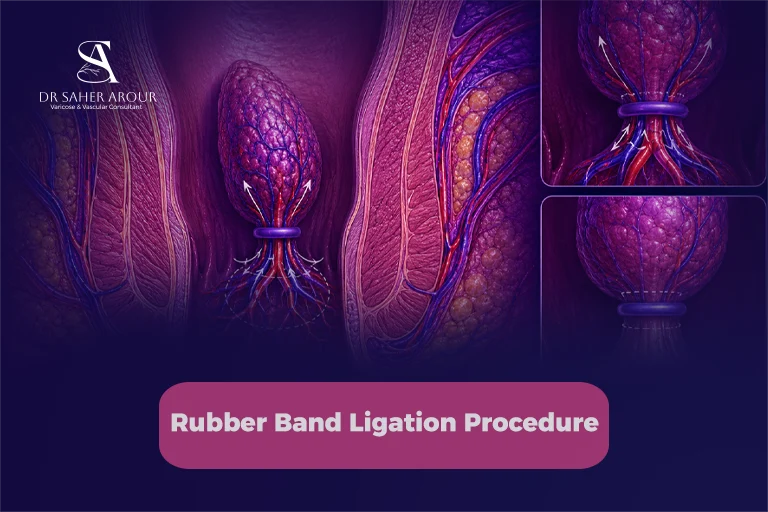
- How it works: The rubber band cuts off the hemorrhoid’s blood supply [1].
- The timeline: From there, the tissue naturally shrivels up and falls off, usually within one week [1].
- What you will feel: You may feel some discomfort for a few days after hemorrhoid banding [2].
- Expected pressure: It is normal to feel a little pain or fullness in your lower abdomen [1]. This is just your body reacting to the band.
I want you to know that this feeling is completely expected and will pass. It is easy to feel anxious about this pressure and think something is wrong, but it is just a sign that the band is doing its job. Just rest and let your body manage the change naturally.
Diet and Bowel Habits During Recovery: What Matters Most
What you eat and how you go to the bathroom will truly make or break your recovery. I cannot stress enough how big of a role your daily habits play right now. The fear of having a bowel movement is very real for many people after this procedure, but the right food choices will make it much less scary.
Fibre, Hydration, and Why Straining Is the Enemy
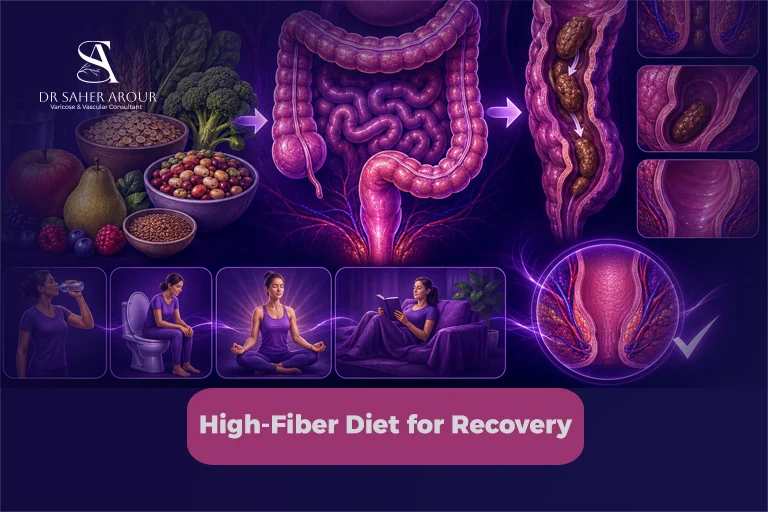
To protect the healing area, you must avoid constipation by eating fiber-rich foods, drinking more water [1]. Soft stools are your best friend right now because they pass easily without scraping the sensitive tissue. As a quick tip, foods like oats, flaxseeds, and soft fruits are incredibly helpful here because they hold water and keep things moving smoothly.
Please do not strain to have bowel movements [1]. Pushing hard puts heavy pressure on the area and can easily cause setbacks. Keeping your digestion smooth is the absolute best way to support your body while it heals. Just keep sipping water throughout the day, and never hold it in when you feel the urge to go.
Normal vs Concerning Symptoms During Recovery
It is entirely natural to feel worried about every little ache or drop of blood you see in the toilet after your procedure. To put your mind at ease, I always like to give my patients a simple guide so they know exactly what to expect and when to pick up the phone.
| Normal Symptoms (Do Not Panic) | Concerning Symptoms (Call the Clinic) |
| You may notice bleeding from your anus when the hemorrhoid falls off [1]. | Contact your healthcare provider if you have fever or chills [1]. |
| You may also notice some bleeding for a few days after the procedure. This is completely normal [2]. I expect this light spotting. | Contact your healthcare provider if you have severe pain [1]. |
If you experience any of those clear signs on the right side, it does not mean something terrible happened, but it means we need to examine you in the clinic. These are not normal parts of the healing journey, and we need to address them immediately to keep you safe and comfortable.
When to Return to Work and Physical Activity
Many people think they will be stuck in bed for weeks, but the truth is, you can usually go back to your usual activities right after hemorrhoid banding [1]. I actually encourage light movement because it helps your blood circulation. Staying active safely is a core part of maintaining a healthy vascular system, similar to the guidance I share in our Pillar P5: PE & DVT Guide or our DVT in the Leg articles. Walking around the house or taking short trips outside is a great start.
However, you absolutely still need to protect the healing area. Please do not lift heavy objects for at least two weeks [1], as straining your core muscles puts direct pressure right where you are trying to heal. Give your body a proper chance to recover before you pick up heavy boxes, gym weights, or even your toddlers.
Frequently Asked Questions
How long does pain last after hemorrhoid treatment?
You may feel some discomfort for a few days after hemorrhoid banding [2]. It is also normal to feel a little pain or fullness in your lower abdomen [1]. This pressure usually fades within the first week, so just rest and listen to your body.
Can I exercise after hemorrhoid treatment?
You can usually go back to your usual activities right after hemorrhoid banding [1]. Light walking is actually great for recovery. However, do not lift heavy objects for at least two weeks [1] to avoid straining your healing tissues.
Is bleeding after hemorrhoid treatment normal?
Yes. You may notice bleeding from your anus when the hemorrhoid falls off [1]. You may also notice some bleeding for a few days after the procedure, which is completely normal [2]. Light spotting is expected, but call the clinic if you pass large blood clots.
What foods should I avoid after hemorrhoid treatment?
Avoid foods that cause hard stools, like processed meals or heavy dairy. Instead, prevent constipation by eating fiber-rich foods and drinking more water [1]. Keeping your bowel movements soft is the best way to protect the area while it heals.