
Minimally invasive endovascular surgery for PAD (peripheral artery disease) in diabetic patients is a catheter-based procedure using balloons or stents to safely restore leg blood flow without large incisions.
Managing diabetes requires continuous daily care, so learning that your leg circulation is reduced naturally brings worry about your mobility and long-term health. Thankfully, modern vascular care offers gentle, highly precise ways to reopen narrowed arteries directly from the inside.
Educational Disclaimer: This content is for informational purposes only and is not a substitute for professional medical advice, diagnosis, or treatment.
Here is what you will learn in this guide:
- How catheter-based circulation treatments protect your legs.
- How we choose between balloons, stents, and plaque-removal tools.
- Why your unique arterial pattern guides your personal care plan.
- How restoring healthy blood flow directly supports wound healing and limb preservation.
Table of Contents
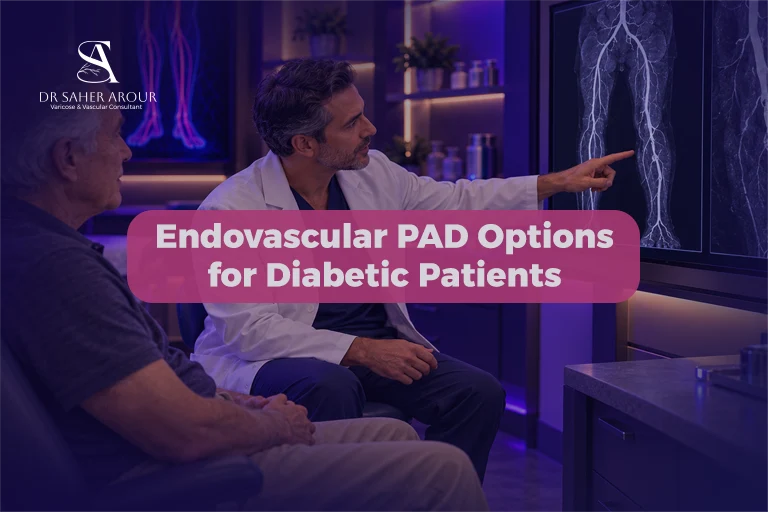
What Is Minimally Invasive Endovascular Surgery for PAD in Diabetic Patients?
Minimally invasive endovascular surgery for diabetic PAD restores blood flow using tiny catheter tools, including plain balloons, drug-coated balloons, mesh stents, or specialized plaque-removal devices [1].
Instead of making a long surgical incision to bypass a blocked vessel, we enter the artery through a tiny pinhole puncture in your groin or foot. We then carefully guide slender, flexible tools directly to the exact blockage. Because this approach avoids large cuts and minimizes physical stress, your recovery is typically smoother and faster, letting you return to your regular routine sooner.
Why Peripheral Artery Disease Is More Dangerous in Diabetic Patients
How Diabetes Affects Leg Arteries (Atherosclerosis, Arterial Calcification, and Neuropathy)
Diabetes is an important risk factor for PAD and its progression to severe circulation loss [1]. Type 2 diabetes frequently causes more severe blockages, particularly in the smaller arteries below the knee [2]. Over time, these vessel walls often become hardened with calcium deposits.
This circulation risk naturally increases with age among people living with diabetes:
- Over 40 years old: Affects up to 20% of individuals.
- Over 50 years old: Affects roughly 30% of individuals.
- Over 70 years old: Affects up to 70% of individuals [1].
When high blood sugar levels also cause nerve numbness (neuropathy), you might not feel the warning pain of poor blood flow [1]. As a result, a circulation blockage can develop silently until a minor foot sore appears.
Why Diabetics Are at Higher Risk of Amputation
When poor blood supply combines with reduced pain sensation, a minor scrape or blister can rapidly become a non-healing sore. Diabetes combined with PAD poses a high risk for serious limb complications [3]. Clinical research confirms that diabetes multiplies lower-limb amputation risks over five times compared to average levels [1]. Without adequate blood flow to deliver oxygen and nutrients, skin tissue cannot heal, making early vascular protection vital.
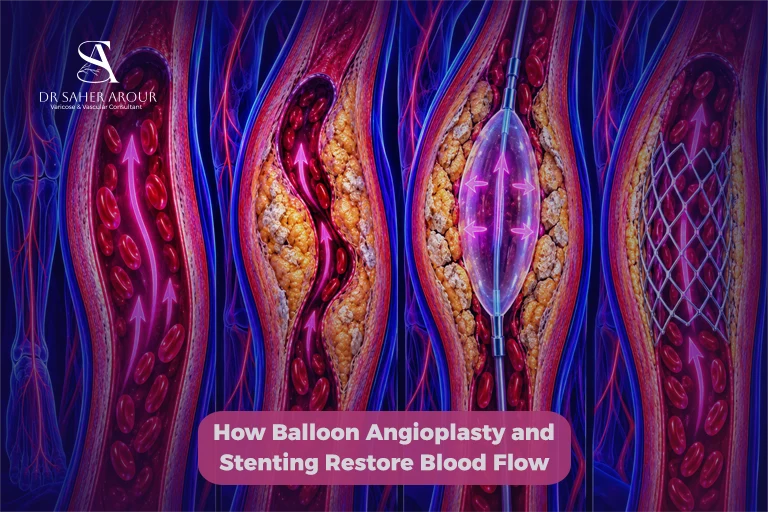
Minimally Invasive Endovascular Treatment Options
Every person’s vascular system is unique. That’s why we choose specific catheter tools based on the location of your blockage, its length, and how calcified the vessel wall is [1]. Here are the primary techniques we use:
Option 1: Balloon Angioplasty (Plain and Drug-Coated Balloons)
Angioplasty uses a specialized miniature balloon inflated inside the narrowed artery to widen the passage. Today, we often use drug-coated balloons that deliver a safe medication to help prevent the artery from narrowing again. Key evidence demonstrates their effectiveness:
| Clinical Result (IN.PACT SFA Trial) | Standard Balloon (PTA) | Drug-Coated Balloon (DCB) |
| 12-month primary patency (artery remaining open) [4] | 52.4% | 82.2% |
| Need for a repeat procedure within 1 year [4] | 20.6% | 2.4% |
These specific results apply to studied leg arteries (thigh and upper knee areas) and guide us in selecting the right balloon type for your legs [4].
Option 2: Arterial Stenting (Bare-Metal and Drug-Eluting Stents)
When an artery needs internal structural support to stay open, we place a tiny, flexible metal mesh tube called a stent. We evaluate your artery’s location to ensure a stent will remain flexible and durable as you walk and move your leg.
Option 3: Atherectomy (Removing Plaque from Calcified Vessels)
Atherectomy uses a specialized catheter device to gently shave or smooth away hardened calcium deposits when balloons alone cannot expand the vessel walls effectively. To be completely clear about medical evidence [5]:
- How it works: It physically removes hardened plaque from inside the artery wall.
- Evidence standing: Current clinical research does not show universal superiority of atherectomy over balloon angioplasty.
- Clinical role: Because it has not proven superior for overall survival or long-term outcomes, we reserve atherectomy specifically for heavily calcified arteries that require specialized preparation.
Option 4: Combination Strategies (Hybrid Procedures)
In complex cases, combining methods offers the safest outcome [1]. A hybrid approach allows us to open one blocked area with a catheter while performing a small surgical repair elsewhere during the same session to maximize blood flow to your foot.
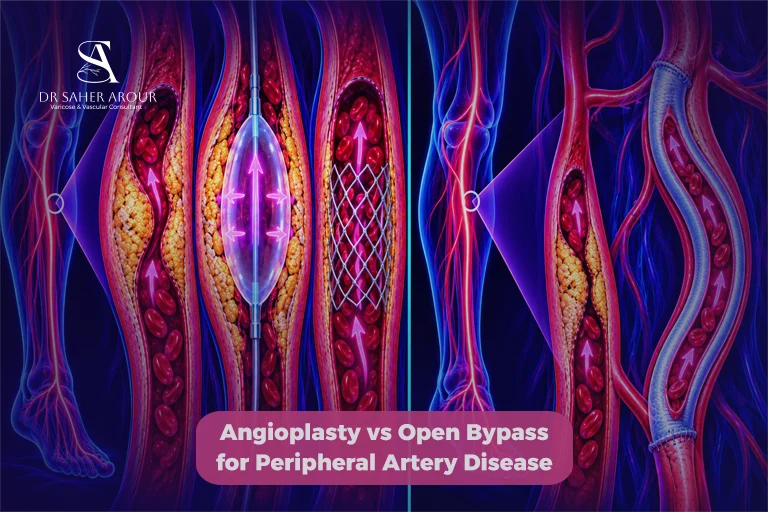
Endovascular Surgery vs Open Bypass Surgery: Which Is Better for Diabetics?
Choosing between catheter-based endovascular treatment and open bypass surgery depends on your overall health, leg anatomy, and personal goals [6]. Both are established, highly effective treatments, and no single choice fits every person [6].
| Treatment Strategy | Key Clinical Considerations |
| Endovascular Surgery | Preferred for high-risk patients to avoid open surgical strain and general anesthesia. Depends on suitable blockage anatomy. |
| Open Bypass Surgery | Considered for highly complex, extensive blockages when a healthy vein is available to serve as a bypass graft. |
When Endovascular Treatment May Be Preferred
If you have medical conditions that make open surgery or general anesthesia higher risk, a catheter approach provides a gentle, minimally invasive way to restore circulation effectively.
When Bypass Surgery May Still Be Needed
If blockages are extensive or very tough for a catheter to cross, open bypass surgery remains a reliable option that we will discuss openly with you.
How Minimally Invasive Endovascular Surgery Can Help Prevent Amputation
Limb Salvage Rates and Clinical Outcomes
Our primary goal in restoring blood flow is to give threatened tissues the oxygen needed to recover [6]. Successful revascularization relieves resting pain, accelerates wound healing, and significantly reduces amputation risks.
Why Timely Treatment Can Affect the Prognosis
Prompt attention is essential when leg wounds appear. Without timely restoration of blood flow, severe circulation loss carries an estimated 25% 1-year amputation risk [6]. Early vascular evaluation ensures timely treatment that preserves your leg and mobility [7].
Risks and Complications Specific to Diabetic Patients
Wound Healing Problems and Infection Risk
Even small access punctures need proper care when you live with diabetes. Keeping your blood sugar well controlled and following simple wound-care guidelines keeps your puncture site clean and infection-free.
Restenosis: When the Artery Narrows Again
Over time, a treated artery can gradually narrow again due to natural tissue healing [1]. That is why we place you on an ongoing monitoring plan to protect your circulation long after your procedure.
Recovery and Aftercare After Endovascular PAD Surgery
The First Days After the Procedure
Most patients return home quickly after catheter therapy. Resting your leg for a brief period lets the access site heal, and we will show you simple ways to check your foot’s warmth and skin tone at home.
Blood Sugar Control, Wound Care, and Follow-Up Imaging
Long-term limb protection involves an active care partnership [1]:
- Blood sugar management: Maintaining steady glucose levels reduces complications and supports vessel health after intervention.
- Regular clinical check-ups: Periodic pulse and foot checks confirm that your circulation remains strong.
- Routine Doppler ultrasound: Simple ultrasound scans at 1–3 months, 6 months, 12 months, and then yearly ensure your artery remains open.
- Prompt symptom checks: Contact us immediately if you notice new leg discomfort, temperature changes, or skin irritation.
How to Choose the Right Vascular Surgeon and Center
Select a vascular team that thoroughly evaluates your unique circulation, explains every option in plain language, and offers dedicated long-term care focused on your quality of life.
FAQ Section: People Also Ask
Is endovascular surgery safe for diabetic patients?
Safety depends on your specific anatomy, kidney health, and overall medical condition, making personalized evaluation essential.
Which is better for diabetics with PAD: angioplasty or bypass surgery?
Neither is universally better. The best option depends on your arterial blockage pattern, surgical risk, and health history.
Can endovascular surgery help prevent leg amputation in diabetics?
Yes, restoring blood flow provides the oxygen needed for sores to heal, significantly supporting limb preservation.
How long can a stent remain open in a diabetic patient’s leg artery?
Stent durability varies based on the artery size, blockage severity, stent type, and your blood sugar control.
What is the recovery time after endovascular PAD surgery?
Recovery is usually rapid, though overall healing depends on whether a foot wound was present before treatment.
Does insurance cover minimally invasive PAD treatment for diabetics?
Coverage depends on your specific insurance provider, region, and medical necessity for vascular revascularization.
References
[1] 2024 ACC/AHA/AACVPR/APMA/ABC/SCAI/SVM/SVN/SVS Guideline for the Management of Lower Extremity Peripheral Artery Disease.
[2] Type 2 diabetes is associated with more severe and more distal PAD.
[3] Diabetes with PAD is a high-risk combination for major complications including amputation.
[4] In the IN.PACT SFA randomized trial, 12-month primary patency was 82.2% with DCB versus 52.4% with PTA in symptomatic superficial femoral/proximal popliteal PAD.
[5] Atherectomy removes/cuts atheroma; available randomized evidence does not establish clear superiority over balloon angioplasty.
[6] Endovascular therapy and surgical bypass are the principal CLTI revascularization strategies (BEST-CLI Trial).
[7] Timely diagnosis and appropriate treatment, including revascularization when indicated, are essential for CLTI limb preservation.