Chronic thromboembolic pulmonary hypertension (CTEPH) is a rare complication where unresolved, organized blood clots permanently block your pulmonary arteries after an acute pulmonary embolism. When you experience a blood clot in the lung, you naturally expect to recover steadily with medication. When that does not happen, it’s very scary and confusing. You might wonder why your breathing is still difficult weeks or months later. I understand that living with this uncertainty is hard, especially when you’re doing everything right with your recovery.
you’re not alone in this process. Many patients feel dismissed when their breathing does not improve, but your symptoms are real. Knowing the facts gives you the power to make the best medical decisions alongside your clinical team. Let me walk you through the biology of these organized clots, the specific warning symptoms you should never ignore, the specialized imaging tests we use to find hidden blockages, and the medical or surgical treatments that can clear the pathway and restore your lung function.
Table of Contents
What is CTEPH after pulmonary embolism and how does it develop?
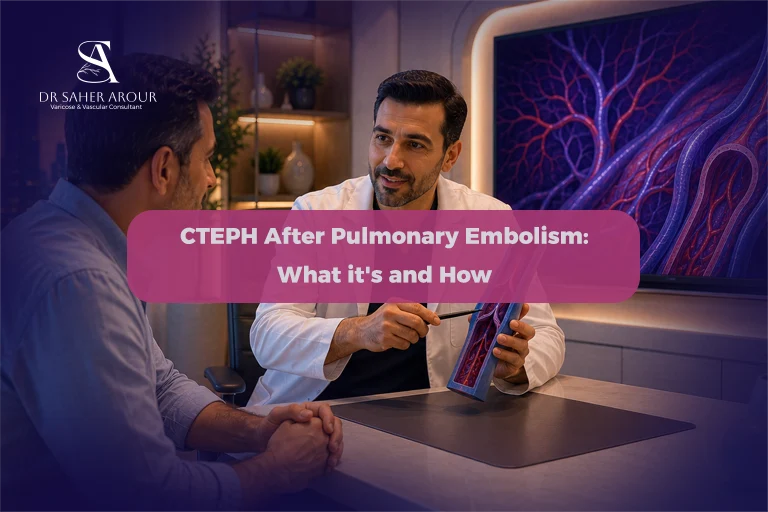
CTEPH is a rare, life-threatening condition where unresolved blood clots turn into fibrous scar tissue, permanently blocking the pulmonary arteries and severely straining the heart.
When a patient suffers an acute pulmonary embolism, the standard expectation is that blood thinners will help the body break down the clot over time. However, CTEPH is a rare complication of acute PE [1]. In these specific cases, the clot simply does not disappear. Medical data shows that up to 4% of PE patients develop CTEPH [2]. While the overall numbers seem small, the physical impact on a person’s daily life is immense.
Because the blockage remains anchored tightly in the vessels, the right side of your heart has to push much harder to send blood into the lungs. This creates dangerously high pressure in the lung arteries. Medically, mPAP >20 mmHg + elevated PVR defines CTEPH [3]. This means your heart is under significant, continuous strain. it’s a very real, physical barrier inside the blood vessels that cannot be treated with extra rest: it requires targeted clinical intervention.
Why Some PE Clots Don’t Resolve Completely: The Biology of Organised Thrombus
For most patients, the body’s natural healing system clears a clot safely. But sometimes, the clot goes through a biological change rather than melting away. CTEPH results from unresolved organized thromboembolic obstruction after PE [4]. To picture this easily, imagine the soft clot becoming fibrous and physically attaching to the vessel wall, turning into a hard, scar-like mass. This organized tissue behaves exactly like a permanent roadblock.
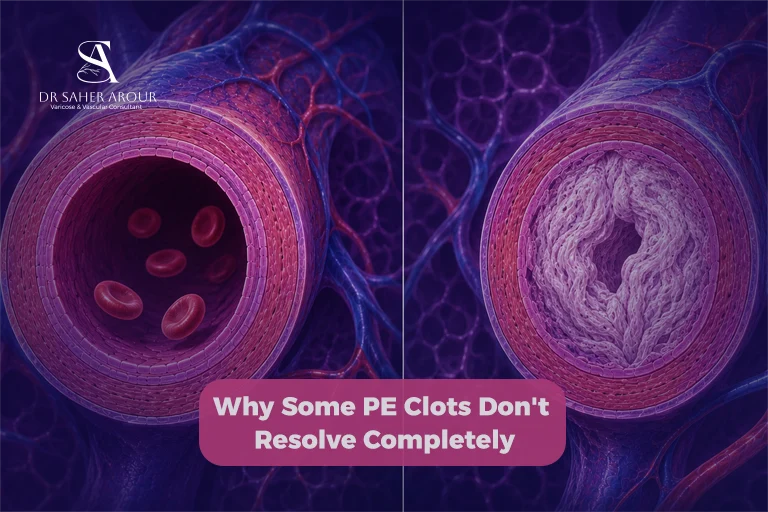
Because the clot is no longer a soft gel, standard blood thinners cannot dissolve it anymore. This leads to a persistent narrowing of the arteries. The lungs are starved of normal blood flow, and the critical oxygen exchange drops significantly. This explains why you might feel completely out of breath even when you’re just sitting on the couch. We need to find out exactly what caused this shift so we can drop your risk of future problems and start the right plan to clear that pathway for good.
Symptoms of CTEPH: How It Differs From Normal PE Recovery
Recovering from a blood clot takes time, and some mild shortness of breath is expected in the early weeks. But CTEPH feels distinctly different. The symptoms can be deeply frustrating because they don’t fade away as expected. To help you monitor your health accurately, we look for specific signs indicating that recovery has stalled.
Common symptoms: dyspnea, chest pain, syncope, fatigue [5]. Instead of waking up feeling a little stronger each week, you might notice your energy is completely vanishing. Let’s look at the specific signs that tell us your recovery is not following the usual path:
- Unrelenting Fatigue: A profound exhaustion that does not improve with a good night’s sleep, driven by your heart working overtime.
- Chest Pain or Pressure: Often felt during exertion as the right side of the heart struggles against the blocked lung vessels.
- Swelling (Edema): Fluid buildup in your legs or ankles, which is a direct physical sign that the right side of the heart is straining to pump effectively.
Breathlessness That Persists or Worsens Instead of Improving
The most noticeable warning sign is breathing trouble that simply will not go away. I often see patients who feel deeply frustrated because they are doing everything right, yet they are still gasping for air on a short walk. If your symptoms linger, medical guidelines provide clear advice: evaluation recommended after >3 months persistent symptoms [5]. Furthermore, this evaluation recommended after ≥3 months anticoagulation [6].
Many patients ask us How Long to Recover From PE normally. Typically, breathing improves gradually with blood thinners. If you’re still struggling for air while climbing stairs after a few months, it’s not just poor fitness. The physical blockage is preventing oxygen from reaching your body. We will examine you thoroughly rather than assuming you just need more time to rest.
Exercise Intolerance and Signs of Right Heart Strain
When the lungs are blocked, the right side of the heart takes the damage. It works double time to push blood past the fibrous scar tissue. Over time, the heart muscle becomes tired and enlarged. You might feel chest pressure or even experience syncope (fainting) [5]. Fainting is a major warning that your brain is temporarily lacking oxygen. These are serious signals that require immediate medical attention, not something you should try to push through silently.
How CTEPH Is Diagnosed: Why Standard Tests May Miss It
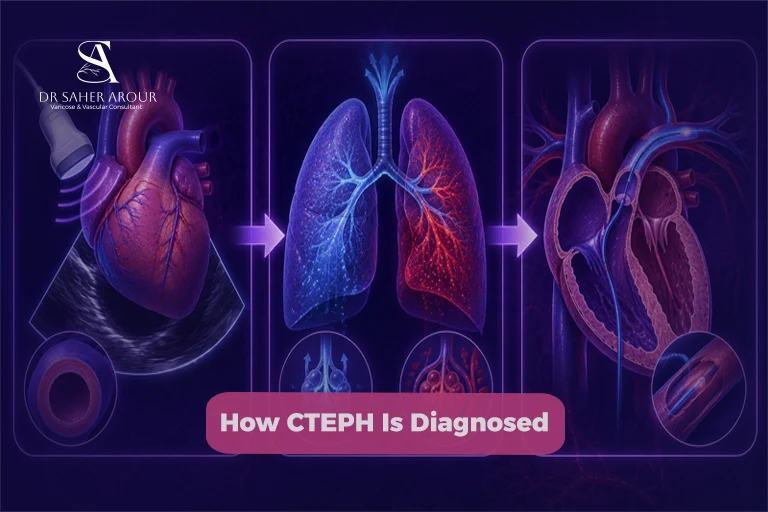
Finding this specific condition can be difficult because the symptoms easily mimic asthma, weight gain, or general heart failure. A standard chest X-ray will not show the fibrous clots. To ensure nothing is missed, the standard diagnostic pathway: echo → V/Q → RHC [7]. The echocardiogram looks at how the right side of the heart is handling the pressure, giving us the first strong clinical clue that the pulmonary arteries might be blocked.
V/Q Scan: The Most Sensitive Screening Test
If the echo shows high pressure, the next step is a Ventilation/Perfusion (V/Q) scan. This test maps the air and blood flow in your lungs to spot any mismatched areas. You will lie still while a special camera takes images of the air and blood moving inside your chest. It does not hurt, but it gives us a very clear picture of what is happening. The V/Q sensitivity 90–100%, specificity 94–100% [8].
This means it’s highly reliable at finding the blockages. Just as importantly, normal V/Q effectively rules out CTEPH [8]. If the scan is entirely clear, we can safely tell you that chronic organized clots are not the cause of your breathing problems, and we can look for other answers to get you feeling better.
Right Heart Catheterisation: The Definitive Hemodynamic Diagnosis
To know exactly what we’re dealing with and choose the safest treatment for you, we need a direct look inside. RHC + angiography = gold standard [8]. It sounds intimidating, but it’s a highly controlled standard procedure that we perform with local numbing medication so you remain completely comfortable.
During this procedure, we gently guide a thin tube into the heart and lung vessels to measure the exact pressure. We also inject a special dye to take precise pictures of the organized clots. This gives us the exact map of the blockages, helping us decide exactly which treatment approach fits your anatomy best.
Treatment Options for CTEPH
When we find organized clots, taking action is absolutely necessary. CTEPH is progressive and potentially fatal if untreated [2]. To understand the reality of this disease without intervention, medical studies show ~10–20% 2–3 year survival untreated severe cases [2]. Hearing this can be frightening, but we have highly effective treatments today that can change this outcome entirely.
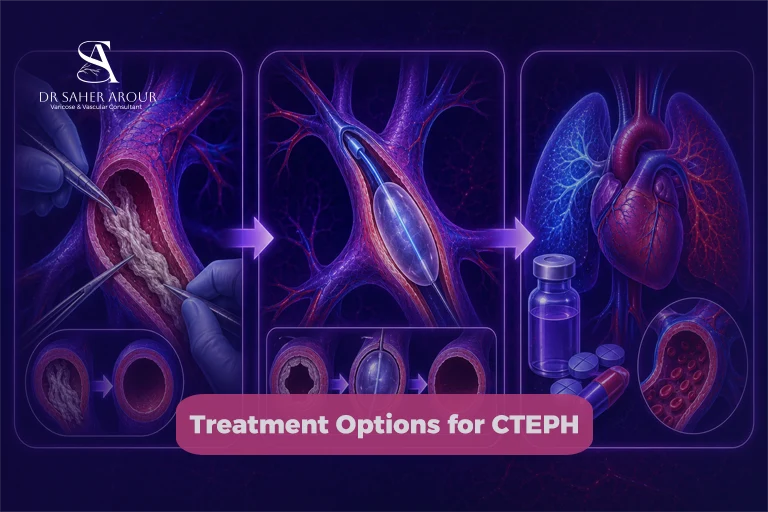
Below is a clear summary of the paths we take based on your specific condition to ensure the best possible result:
| Treatment Option | How It Works | Expected Medical Outcome |
| Pulmonary Endarterectomy (PEA) | Major surgery to physically remove the organized clot from the arteries. | Potentially curative: normalizes hemodynamics and improves long-term survival. |
| Balloon Pulmonary Angioplasty (BPA) | A minimally invasive catheter procedure to stretch open blocked vessels. | Effective option for patients whose blockages cannot be safely reached by open surgery. |
| Medical Therapy (Riociguat) | Daily medication that relaxes blood vessels to physically lower the pressure. | Improves exercise capacity for inoperable cases or residual hypertension after surgery. |
Pulmonary Endarterectomy: Surgical Removal of Chronic Organized Clot
The best chance for a complete recovery is a specialized surgery called pulmonary endarterectomy (PEA). For many eligible patients, PEA is potentially curative treatment [4]. During this operation, a highly skilled surgical team carefully peels away and clears out the scar-like blockages directly from inside the lung arteries.
The clinical results can be life-changing. PEA improves survival and hemodynamics [8]. By physically removing the obstruction, the right heart pressure drops immediately. Many patients wake up from surgery and notice their breathing feels lighter and more natural almost right away.
Balloon Pulmonary Angioplasty: The Catheter-Based Alternative
Not everyone is a candidate for major chest surgery. The blockages might be too deep in the smaller vessels, or you might have other medical conditions that make surgery too risky. If surgery is not an option, BPA is option for inoperable CTEPH [8].
In this less invasive procedure, we use a tiny balloon fed through a catheter to stretch the narrowed vessels open. This breaks the fibrous webs and restores blood flow, easing the workload on your heart. This gives us a very safe and effective way to help you regain your breath and get back to your daily life, even if open surgery is not the right fit for you.
Medical Therapy: Including Riociguat for Inoperable CTEPH
We also have powerful medications to help manage the disease if surgery or balloon procedures cannot clear all the blockages entirely. Currently, Riociguat is sole approved drug therapy [9]. This medication works by relaxing the blood vessels in the lungs, which lowers the pressure and makes it easier for the heart to pump. It helps improve exercise capacity and drops the daily burden of breathlessness for patients who cannot undergo mechanical treatments.
Why Early and Appropriate PE Treatment Matters for Reducing CTEPH Risk
The journey from a fresh blood clot to a chronic blockage is complex. The best way to protect your lungs is to treat the initial acute clot properly from day one. You can read our PE & DVT Complete Guide to understand exactly how blood thinners stop fresh clots from growing and causing permanent damage.
Taking your prescribed anticoagulants exactly as directed gives your body the best environment to dissolve the clot naturally before it organizes into fibrous scar tissue. We closely monitor your progress during the first few months to ensure you’re healing safely. If we catch the signs of high pressure early, we can step in with the right tests and treatments before the heart sustains heavy damage.
Frequently Asked Questions
What percentage of PE patients develop CTEPH?
While most blood clots dissolve with standard treatment, up to 4% of PE patients develop CTEPH [2]. it’s a rare complication of acute PE [1], but it requires serious long-term management if it occurs.
How is CTEPH different from regular pulmonary hypertension?
CTEPH results from unresolved organized thromboembolic obstruction after PE [4]. While other forms of pulmonary hypertension may result from heart or lung diseases without a prior clot, CTEPH is specifically driven by this physical scar-like blockage that remains inside the vessels.
Can CTEPH be cured?
Yes, PEA is potentially curative treatment [4] for suitable surgical candidates. Removing the blockage physically can restore normal blood flow and significantly improve a patient’s quality of life and long-term health.
How long after a PE should I be tested for CTEPH if symptoms persist?
If you still feel breathless, evaluation recommended after ≥3 months anticoagulation [6]. Waiting longer than this when symptoms are clearly not improving can delay important care and stress the heart further.
What are early warning signs of CTEPH after pulmonary embolism?
Common symptoms: dyspnea, chest pain, syncope, fatigue [5]. If you notice these signs not getting better or growing worse after your initial treatment, you must contact your doctor for specialized testing.
Is balloon pulmonary angioplasty safe for CTEPH treatment?
When major surgery is too risky or the blockages are difficult to reach, BPA is option for inoperable CTEPH [8]. it’s a catheter-based method that helps restore blood flow with much less physical trauma to the chest compared to open surgery.
References
- [1] Frontiers in Cardiovascular Medicine Article 10.3389/fcvm.2024.1439411
- [2] PMC Article PMC3006154
- [3] PMC Article PMC10410247
- [4] PubMed Article 36990148
- [5] PMC Article PMC8791133
- [6] JACC Article 2025.11.005
- [7] Annals of the American Thoracic Society Article 16/7/811
- [8] StatPearls NBK549836
- [9] Ten Points to Remember: Chronic Thromboembolic Pulmonary Hypertension