
Chronic wounds that won’t heal are open skin injuries that fail to progress through the normal healing stages within 4 to 6 weeks, often due to underlying conditions such as diabetes, poor circulation, chronic venous insufficiency, or persistent infection. These wounds—including diabetic ulcers, venous stasis ulcers, and pressure sores—require specialized medical evaluation and targeted treatment to restore the body’s natural tissue repair process
The truth is, a wound simply cannot close if the area isn’t receiving enough oxygen-rich blood, or if blood is pooling in the leg instead of returning to the heart. Leg wounds that fail to heal after weeks of antibiotics and dressings often have a vascular cause, not only an infectious one [1]. Poor circulation, diabetes, and other health conditions are the usual culprits behind delayed healing [2].
We usually look for these symptoms as red flags if a wound has stayed open for too long:
- stubbornly open wound even after weeks of consistent, standard dressing changes.
- A leg that feels heavy, visibly swollen, or unusually cold to the touch compared to the rest of your body.
- Antibiotics that don’t seem to make a difference because the primary obstacle is poor circulation.
Table of Contents
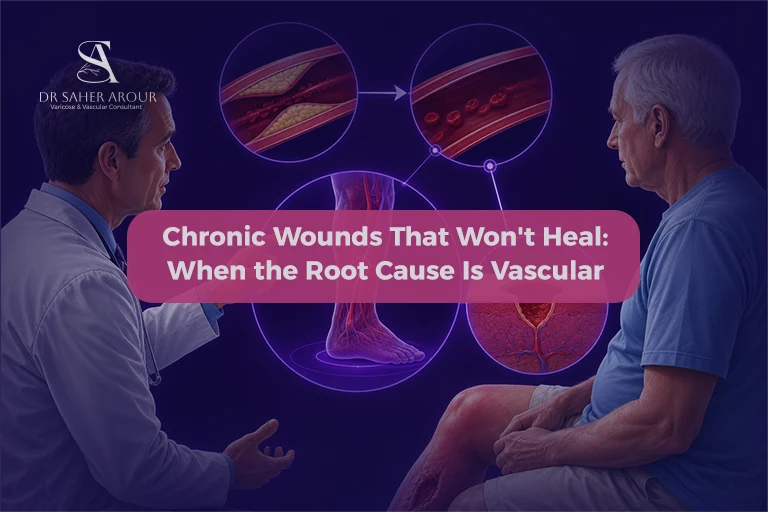
Why Some Chronic Wounds That Won’t Heal Without Addressing Blood Flow
To answer this, I often tell my patients to think of the healing process like a busy construction site. To rebuild skin, your body needs a constant, reliable delivery of oxygen and nutrients. Your blood vessels are the roads carrying these materials. If those roads are blocked, busy or damaged, the building materials simply never arrive, the repair work grinds to a halt, and the wound stays open. This is precisely why peripheral artery disease can slow the healing of leg ulcers by reducing blood flow [2].
During lymphedema and chronic wound treatment consultations, I see much more relief from patients when they understand that. It helps clear that “hidden worry” to realize that healing takes time; vascular ulcers can take weeks or even months to heal, even under normal circumstances [1]. Success depends heavily on severity and how early we start [1]. If we ignore the blood flow problem, the surface bandages can only do so much.
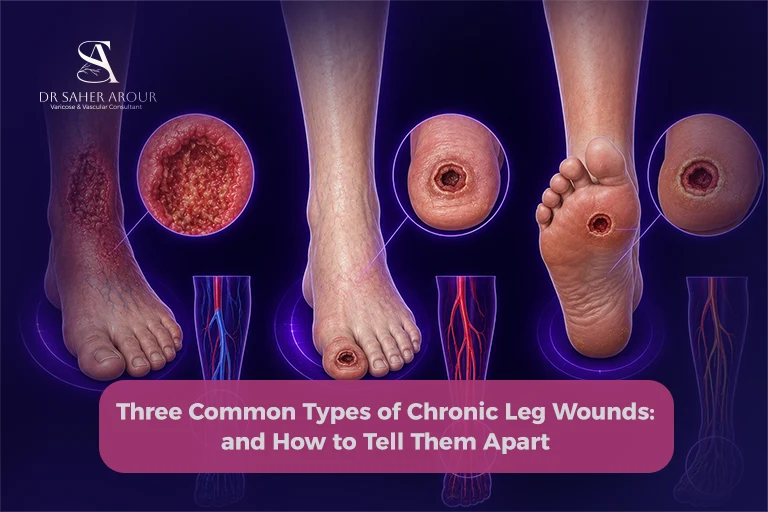
Three Common Types of Chronic Leg Wounds: and How to Tell Them Apart
Our top priority is figuring out exactly what kind of sore we are dealing with. Chronic leg wounds commonly include venous, arterial, and diabetic foot ulcers [1]. Each type gives us very different indicators about what is actually happening inside your blood vessels.
Venous Leg Ulcer: The Most Common Type
These are the most common type of chronic wounds in the lower extremity [3]. They happen when your leg veins struggle to send blood back to the heart, which is related to chronic venous insufficiency and hypertension [3]. The blood pools in the lower leg, causing a heavy swelling that eventually breaks down the skin.
Read More: artery replacement
Proper venous leg ulcer treatment typically includes compression therapy and direct wound management [3]. However, we must be careful; compression shouldn’t be used randomly if arterial disease is severe [3]. That’s why I always check the arterial circulation before wrapping a leg tightly.
Arterial Leg Ulcer: Less Common but Potentially More Dangerous
You might wonder how an arterial ulcer vs venous ulcer actually looks. Well, the signs are distinct. Arterial ulcers are caused by tissue ischemia “a severe lack of oxygen” and are associated with abnormal pulses and cold extremities [3]. Because the fresh blood supply is practically cut off, your foot often feels cold and may look pale.
These sores require fast attention. Because limited blood flow can lead directly to tissue death, making these ulcers dangerous [1]. Without restoring that fresh supply, the surrounding tissue simply cannot survive.
Diabetic Foot Ulcer: When Nerve Damage and Vascular Disease Combine
I must say that diabetes changes foot wounds completely. Its problems can involve neuropathy, ischemia, infection, and gangrene [5]. I see patients who often lose feeling due to nerve damage, so pay attention that you might not notice a cut until it becomes a threatening sore. On top of that, diabetes-related foot disease increases amputation risks [6].
When dealing with diabetic foot ulcer vascular issues, we must track progress by milestones. I know it’s hard to keep watching a sore day after day.. that is why we say if a wound doesn’t shrink by 50% within 4 weeks despite care, we must reassess its vascular status [7]. We cannot afford to “wait and see.”
Why Antibiotics Alone Cannot Heal a Wound With Inadequate Blood Flow
When I see patients arriving with bags of different antibiotics, fearing that the wound won’t close. I tend to explain that antibiotics alone don’t heal ulcers; they are specifically for treating infections [8]. They clear bacteria, but they simply cannot heal the ulcer by themselves [8].
Read More: why varicocele comes back
Effective chronic wound care means looking at the whole picture. If the “blood road” is blocked, the antibiotic pill has a very hard time even reaching the infected tissue. We will treat the infection, but we also have to restore the physical blood flow to let your body repair the broken skin.
How a Vascular Surgeon Assesses a Non-Healing Wound
When you come in for a consultation, we don’t just look at the surface; we check the “plumbing” underneath to fix the root cause of the problem.
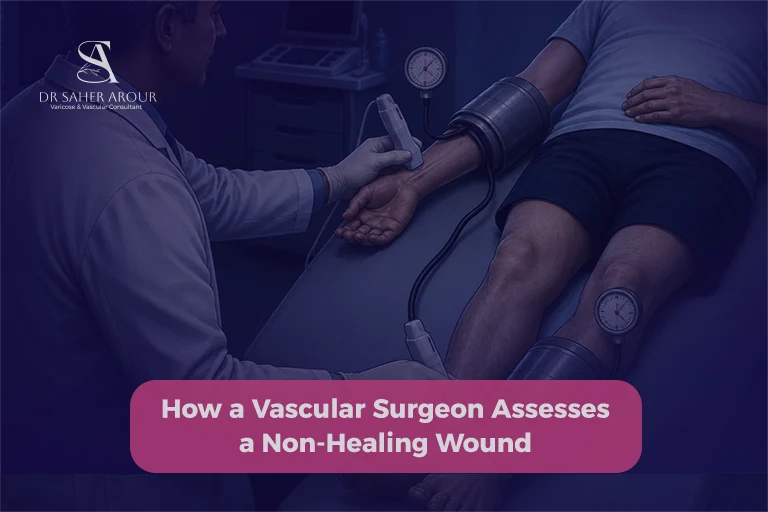
Ankle-Brachial Pressure Index (ABPI): A First-Line Test
We usually start with a painless pressure test called ABPI, a widely used test for peripheral artery disease [9]. This ABPI wound assessment gives us a clear idea of your circulation, though diabetes may affect the interpretation [9]. In diabetic cases, we often need Doppler waveforms and a Toe-Brachial Index (TBI) to find hidden blockages [7].
Duplex Ultrasound and CT Angiography for Wound Assessment
If we suspect a serious blockage, we need a precise map. But don’t worry, as we have some effective test tools like Duplex ultrasound and CT angiography which are valid tests for detecting peripheral artery disease [10]. So we use Ultrasound, which is a safe, non-invasive way to look inside your leg and see exactly where the blood is stopping.
Vascular Treatment That Enables Wound Healing
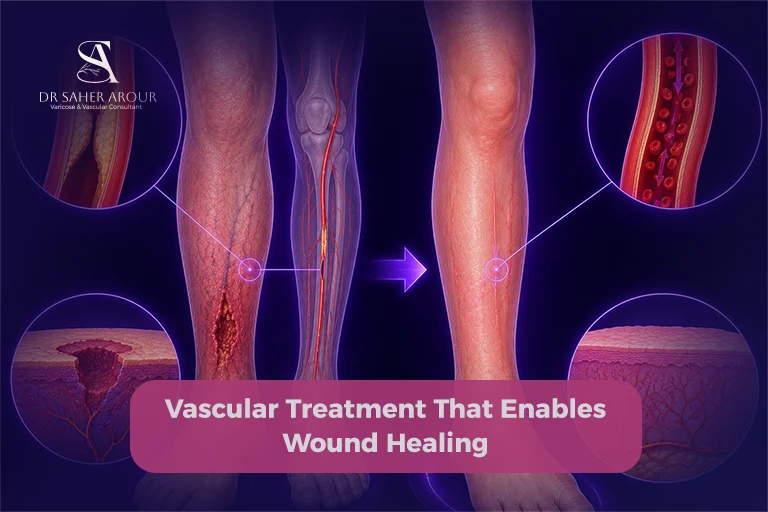
Once we pinpoint the blockage, we can create a clear plan to open it up. Revascularization can enable healing in chronic limb-threatening ischemia [11]. Hoping to restore in-line blood flow to at least one foot artery [7].
We may also need a minimally invasive balloon procedure or an artery replacement to bypass the blocked segment. Getting the blood moving again is our main goal. Alongside this, gentle wound debridement vascular care removes dead tissue. For tough cases, hyperbaric oxygen wound therapy or skin graft leg ulcer procedures may be used to support nonresponding ulcers [4].
When Is Limb Amputation a Risk and How Is It Prevented?
I know the silent fear many patients carry. Vascular ulcers can lead to gangrene and amputation if not treated promptly [1]. Limb-threatening diabetic foot problems require immediate referral [5]. The most powerful step here is to act early. By restoring circulation, we give your tissue the support it needs to survive and keep you walking comfortably.
Frequently Asked Questions
How do I know if my wound is venous or arterial?
Venous ulcers happen with leg swelling and take weeks or months to heal. Arterial ulcers are linked to ischemia, cold extremities, and abnormal pulses [3]. A vascular clinic assessment will give the exact answer.
Can a leg ulcer heal without surgery?
Some can, but it depends on severity and early treatment [1]. Many venous ulcers improve with special wraps, but blocked arteries often need a procedure to restore blood flow.
How long does a venous leg ulcer take to heal?
They can take weeks or months even under normal circumstances [1]. Venous ulcers specifically often take weeks or months to close completely [4].
What is the danger of leaving a non-healing wound untreated?
Untreated vascular wounds can develop deep infection and gangrene [1]. For diabetic patients, this demands immediate attention to lower the risk of losing the limb [5].
References
[1] Cleveland Clinic: Stasis Ulcer
[2] Cleveland Clinic: Leg Ulcers
[3] NCBI Bookshelf: Venous Leg Ulcers
[4] Cleveland Clinic: Venous Ulcer
[5] NICE Guideline: Diabetic foot problems
[6] IWGDF Practical Guidelines on Diabetes-related Foot Disease
[7] IWGDF Guidelines on Peripheral Artery Disease
[8] NHS: Leg ulcer treatment
[9] NCBI Bookshelf: Ankle Brachial Pressure Index
[10] NICE Consultations: Diagnostic tests for PAD
[11] ACC 2024 Guideline for Lower Extremity PAD