
Firstly, blood thinners after vascular surgery include antiplatelet medicines like aspirin and clopidogrel, and anticoagulants like warfarin and DOACs, to prevent dangerous clots [1][2]. We rely on these medications to protect your healing blood vessels and keep your circulation strong.
When you come home after surgery, you’ll likely adjust to a new daily routine, and managing new medications is a big part of that. It’s completely normal to look at your new prescription bottles and wonder how they work or what side effects to watch for. You don’t have to guess.
Medically Reviewed & Written by Dr. Saher Arour,
Board-Certified Vascular Surgeon
Here is exactly what I’ll cover in this article to keep you safe and confident during your recovery:
- The clinical difference between antiplatelets and anticoagulants.
- Specific medication plans based on the exact surgery you had.
- How to handle side effects and manage food or drug interactions safely.
- Useful steps on what to do if you miss a dose or need minor dental work.
Table of Contents

What Blood Thinners Are Used After Vascular Surgery?
People often use the term “blood thinners” as a general phrase to describe all these pills. Medically, however, they are distinct. Although they’re used for similar purposes, anticoagulants are different to antiplatelet medicines, such as low-dose aspirin and clopidogrel [1]. They both help keep your blood flowing smoothly, but they target completely different parts of your body’s natural clotting system.
Why Antithrombotic Medicines Are Used After Vascular Surgery
When we open up a blocked artery in your legs, neck, or abdomen, the inner lining of that vessel is temporarily fragile. The main goal of giving you antithrombotic medication is to reduce ischemic and thrombotic events, keeping the newly opened pathways clear [3]. However, prescribing these isn’t an automatic decision. The factors favoring addition of antiplatelet medication, antithrombotic medication, or both are balanced against the risk of bleeding [3].
How Vascular Procedures Can Increase the Risk of Clot Formation
Procedures like bypasses or placing stents physically alter the inside of your blood vessels. Your body naturally reacts to this change by trying to heal the area, which unfortunately involves forming clots.
Because every procedure creates a unique healing environment inside the artery, your medication plan is tailored specifically to the type of surgery you underwent.
The Risk Window : How Risk Changes After Surgery
You may be wondering exactly how long you’ll be at the highest risk. The truth is, how long you’ll need to take anticoagulants depends on why they’re needed [4].

Well there’s no universal timeline that applies to everyone. Your risk level relies heavily on the specific procedure performed, the materials we used (like an artificial graft), and your personal medical history.
Two Main Classes of Blood Thinners Used After Vascular Surgery
To help you understand your daily routine better, let’s look at what these two main categories of medication actually do.

Antiplatelets (Aspirin, Clopidogrel) : When and Why
Clopidogrel is an antiplatelet medicine [2]. It prevents platelets (a type of blood cell) from sticking together and forming a dangerous blood clot [2]. Medicines you may be prescribed if you have PAD include low-dose aspirin, clopidogrel, and rivaroxaban [5].
Anticoagulants (Warfarin, DOACs) : When and Why
These are stronger medications that slow down your body’s process of making clots. A commonly prescribed anticoagulant is warfarin [1]. Newer types of anticoagulants, sometimes called direct oral anticoagulants (DOACs), are also commonly used [1].
We don’t prescribe these to every patient just because they had surgery. In fact, RCTs and observational studies have uniformly demonstrated that full-intensity oral anticoagulation therapy aimed at decreasing MACE among patients with PAD provided no benefit and resulted in increased morbidity rates [3]. You will only be prescribed an anticoagulant if you have a clear, specific medical need for it.
Blood Thinner Protocols by Vascular Procedure Type
Your specific surgery dictates your exact pill plan. Here is a practical breakdown of what you can generally expect.
After Carotid Endarterectomy and Carotid Stenting
If you had surgery to clean out the main neck artery, the plan depends on the exact technique we used:
- Open neck surgery (CEA): We usually prescribe a single antiplatelet medicine, like aspirin, to keep your blood flowing smoothly [6].
- Neck artery stents: Because a stent is a medical device placed inside the artery, we typically combine two medications (aspirin and clopidogrel) for at least one month to ensure the stent stays completely open [6].
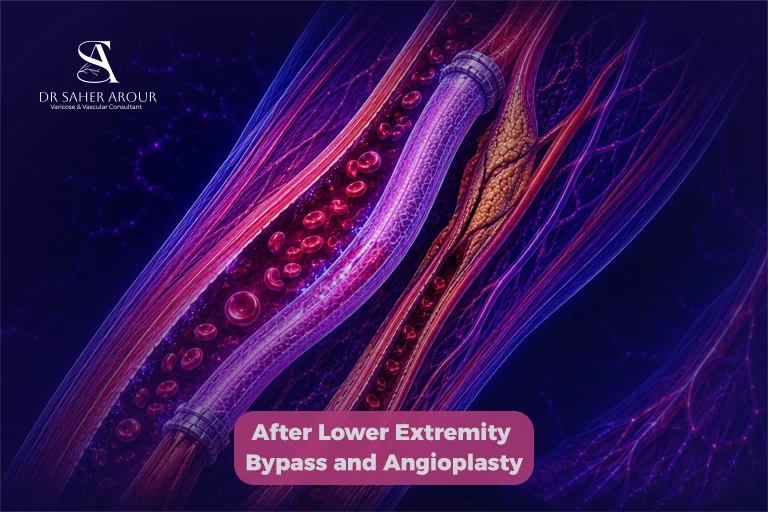
After Lower Extremity Bypass and Angioplasty
When you have a bypass to improve circulation in your legs, the medication strategy depends heavily on the materials used during the operation:
- For standard bypass procedures: We recommend a single antiplatelet therapy—such as aspirin 75 to 100 mg daily or clopidogrel 75 mg daily—to be continued long-term over no treatment at all [7]. This is generally safer than combining it with warfarin [7].
- For artificial tubes below the knee: If your surgery involved a prosthetic graft below the knee, we suggest a dual approach: clopidogrel 75 mg/d plus aspirin (75-100 mg/d) for 1 year [7]. The CASPAR study confirmed that the real protective benefit of this combination happens specifically if you received a prosthetic graft [8].
In certain specific situations, Rivaroxaban (2.5 mg twice daily) combined with low-dose aspirin (81 mg daily) is effective to prevent major adverse cardiovascular events and major adverse limb events in patients with PAD who are not at increased risk of bleeding [3]. When considering this specific mix, we weigh the following clinical outcomes:
| Clinical Outcome | Study Findings (Rivaroxaban + Aspirin vs. Aspirin Alone) |
| The Protective Benefit | It effectively reduces major cardiovascular and limb events, lowering the 3-year risk to 17.3% compared to 19.9% [9]. |
| The Bleeding Risk | It slightly increases the chance of major bleeding, showing a 5.94% rate compared to 4.06% [9]. |
Also, when full-dose OACs are indicated for other conditions in patients with chronic PAD, the addition of antiplatelet therapy should generally be avoided because of bleeding risk, unless a recent percutaneous revascularization was performed [6].
After Aortic Aneurysm Repair (EVAR and Open Repair)
Long-term SAPT can be proposed after (T)EVAR, based on patient’s risk characteristics [6]. SAPT (e.g. aspirin) is advised to avoid cardiovascular events over time [6].
Managing Bleeding Risks and Drug Interactions
I want to focus on how to maintain your safety at home. This actually relies on recognizing what is a normal part of your recovery and what requires an immediate call to the clinic. So here’s what you should pay attention to:
Recognizing Warning Signs of Internal Bleeding
The main side effect of clopidogrel is bleeding more easily than normal [2]. You need to reach out to your care team if you spot specific issues..
Signs of excessive bleeding can include:
- passing blood in your urine.
- passing blood when you poo or having black poo
- severe bruising
- prolonged nosebleeds (lasting longer than 10 minutes)
- vomiting blood or coughing up blood [10].
Food, Supplement, and Medication Interactions
What you eat actually impacts how some of these pills work, especially if you are taking warfarin [11]. Here is what you need to watch:
- Leafy Greens: Foods like spinach and broccoli are high in Vitamin K. You don’t have to stop eating them, but you must keep your portion sizes consistent every week so your medication levels stay stable [11].
- Alcohol: Avoid drinking large amounts, as it heavily disrupts how your blood clots [11].
How Long Do You Need Blood Thinners After Vascular Surgery?
It’s a completely understandable question: when can I stop taking these? The honest answer is that it varies from person to person.
How much to take and for how long depends on why you’re taking it [12]. Your timeline is based on how well you are healing, the specific type of stent or bypass graft used, and your overall bleeding risk. We will monitor your progress and make that decision together.
FAQ Section : People Also Ask
How long do I need to take blood thinners after vascular surgery?
The duration depends on the procedure, the reason for antithrombotic therapy, bleeding risk, and other conditions. How long you’ll need to take anticoagulants for will depend on why they’re needed [4].
What are the side effects of blood thinners after surgery?
Bleeding is the main safety concern with antithrombotic medicines, and the risk depends on the specific drug and combination being used. Signs of excessive bleeding can include: passing blood in your urine; passing blood when you poo or having black poo; severe bruising; prolonged nosebleeds (lasting longer than 10 minutes); vomiting blood or coughing up blood [10].
Can I drink alcohol while taking blood thinners?
Alcohol can increase bleeding risk with some antithrombotic medicines and may interact with treatment, so you should follow your clinician’s specific advice. For instance, while taking warfarin: do not drink large amounts of alcohol [11].
What should I do if I miss a dose of my blood thinner?
How you handle a missed pill depends on the exact medication you are taking [13]:
- Warfarin: Take it as soon as you remember. If it’s already the next day, simply skip the missed pill. Never take a double dose [13].
- Twice-daily pills (like Apixaban): Take the missed pill only if your next scheduled dose is more than 6 hours away [13].
Do I need to stop blood thinners before dental work or minor procedures?
Never stop your antithrombotic treatment without asking us first, even for a teeth cleaning [14]. Your plan will depend on the procedure:
- Major Surgery: We usually pause strong medications about 5 days before the operation [15].
- Minor Dental Work: You might not need to stop at all. Sometimes we just pause the pill 2 to 3 days beforehand, or your dentist will simply use a local treatment to stop any bleeding [15].
References
- [1] NHS: Anticoagulants
- [2] NHS: Clopidogrel – About clopidogrel
- [3] AHA Journals: Circulation
- [4] NHS: Anticoagulants – Uses
- [5] NHS: Peripheral arterial disease (PAD) – Treatment
- [6] European Heart Journal: Antithrombotic therapy in peripheral artery disease
- [7] CHEST Journal: Antithrombotic Therapy for Peripheral Artery Disease
- [8] PubMed: CASPAR Study
- [9] NEJM: VOYAGER PAD Trial
- [10] NHS: Anticoagulants – Side effects
- [11] NHS: Warfarin
- [12] NHS: Apixaban
- [13] NHS: Anticoagulants – Dosage
- [14] NHS: Clopidogrel – Common questions
- [15] CHEST Journal: Perioperative Management of Antithrombotic Therapy