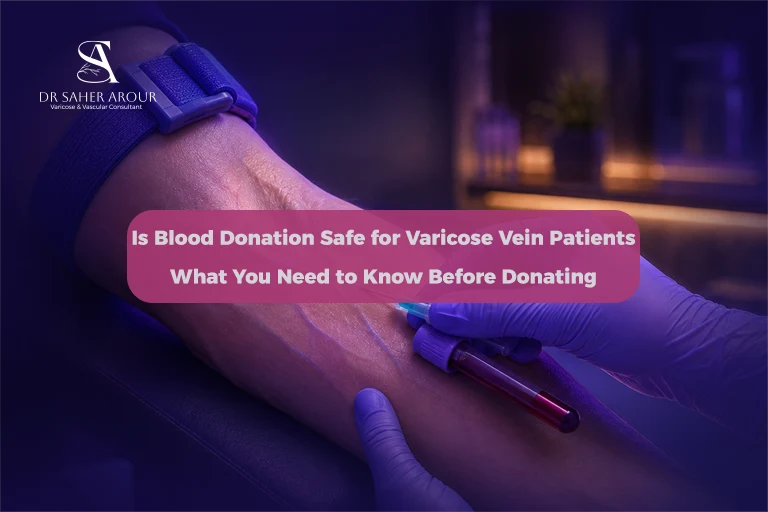
You really want to donate blood and help others. Before donating, make sure if Blood Donation Safe for Varicose Veins.. The short answer is yes. Blood donation safety for varicose vein patients is well-established.
Having varicose veins alone does not automatically disqualify you, provided you’re in good overall health and meet standard donor eligibility criteria. Your veins might look prominent, but if you feel well, you are usually fine to proceed.
Medically Reviewed & Written by Dr. Saher Arour, Board-Certified Vascular Surgeon
Having varicose veins alone does not automatically disqualify you, provided you’re in good overall health and meet standard donor eligibility criteria. Your veins might look prominent, but if you feel well, you are usually fine to proceed.
To keep you safe and comfortable, keep these baseline rules in mind:
- Your overall physical fitness on the day matters far more than the visual appearance of your veins.
- The fluid you give up is restored naturally within a couple of days.
- If you’ve recently had a vein procedure, you simply need to wait until you are fully recovered before donating.
- Active pain, swelling, or skin changes mean you should rest your legs instead of donating right now.
Table of Contents
Can varicose vein patients safely donate blood?
Most healthy individuals without a transmissible infection are eligible to donate blood [1]. The core requirement is that you must be in good health at the time you donate [2]. Simply having superficial venous disease doesn’t mean you’re unwell.
Donation services strictly accept people who are fit and well [1]. The guiding principle is that donation is contraindicated if your own health might suffer as a result [1]. Because uncomplicated varicose veins don’t cause systemic weakness or disrupt core blood flow, donating blood is generally safe for eligible donors, though it’s not entirely risk-free [3].
Who Can and Cannot Donate Blood When You Have Varicose Veins
There is a clear line between who can confidently walk into a donation center and who needs to hold off.
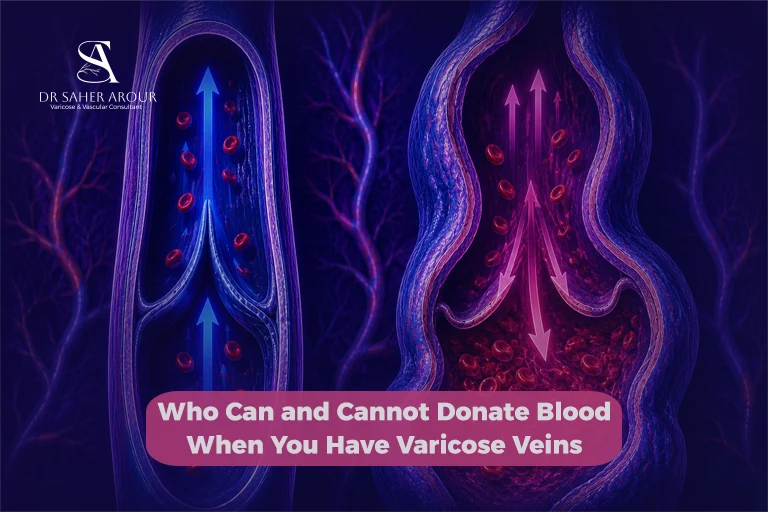
To understand blood donation eligibility, varicose veins patients should check these specific points:
- You can donate if: You feel perfectly healthy, your veins are merely a visual nuisance, and you meet the standard hemoglobin levels (at least 12.0 g/dL for females, 13.0 g/dL for males) [2]. Healthy adults can give blood regularly [1].
- You cannot donate if: You have active phlebitis (inflamed veins), open leg ulcers, severe swelling, or if the donation center applies a temporary deferral for your own safety [1]. We prefer that you wait until your legs have settled down completely.
How Blood Donation Affects Your Venous System
What Happens to Your Blood Volume After Donation
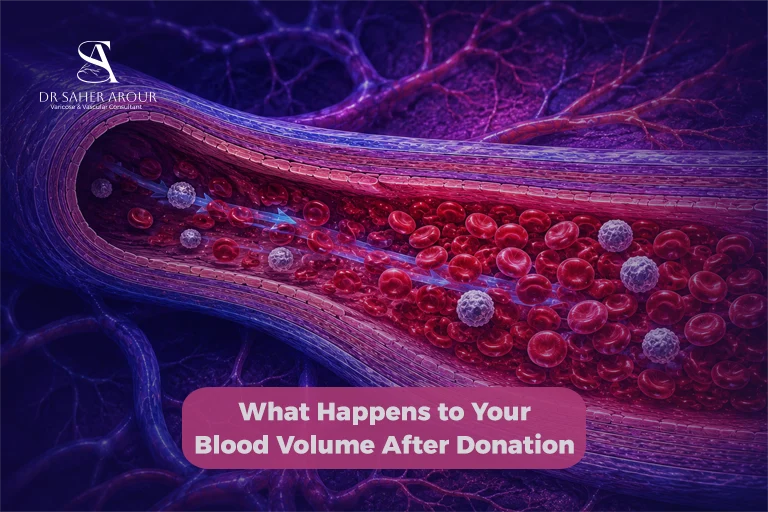
Losing fluid might sound stressful for your veins, but your body is remarkably good at handling this shift. A standard whole-blood donation takes about 450 mL of blood [1]. For an average adult, this is less than 10% of your total blood volume [1].
Your system responds incredibly fast to this drop, and fluid replacement occurs within about 36 hours [1]. Because your blood volume bounces back quickly, your venous system doesn’t experience prolonged stress.
Impact on Venous Pressure and Circulation
When you lose that 450 mL of fluid, your blood pressure does react slightly. Studies evaluating the effects of blood donation on venous circulation show a median peripheral systolic blood pressure change of about -4 mmHg immediately after donation [4].
While your peripheral pressure falls mildly, your central aortic blood pressure and overall vascular stiffness remain entirely unchanged [4]. The core circulation keeping you stable is resilient, and your body easily compensates for the sudden fluid change.
Short-term Effects on Existing Varicose Veins
It’s normal to worry about the immediate effects of blood donation on your legs. Because your central vascular stiffness doesn’t change and the volume loss is under 10% [1] [4], there is no strong evidence that donating blood directly damages or permanently worsens existing varicose veins in people who are otherwise eligible to donate. Your veins won’t suddenly deteriorate just because you gave blood.
Key Factors That Determine If You Can Donate Safely
Severity and Stage of Your Varicose Veins

Venous disease isn’t the same for everyone, and the current stage of your veins directly affects your eligibility:
- Mild to Moderate (C2 Stage): This involves simple bulging veins without skin breakdown. It is quite common, affecting about 19% of people globally [5]. If you fall into this category and feel well, you’re generally safe to donate.
- Advanced Disease (C4, C5, or C6 Stages): These stages involve skin changes or open ulcers, which affect a much smaller percentage of patients [5]. These symptoms signal a compromised venous system.
If you’re experiencing advanced symptoms, read our Varicose Vein Treatment page and get a proper evaluation before attempting to donate.
Whether You Have Had Previous Vein Treatment
If you recently had a procedure to fix your veins, timing matters. Treatments like EVLA and RFA (minimally invasive techniques using laser or radiofrequency heat to close bad veins) appear similarly safe and effective overall for treating varicose veins [6].
More importantly, serious issues like thrombotic complications after endovenous thermal ablation are infrequent [7]. Once you’ve healed and returned to your normal daily activities without pain, your previous vein treatment won’t stop you from donating.
Current Symptoms Swelling Pain or Skin Changes
Always listen to your body. Active symptoms are a clear warning to pause. If your legs throb, feel heavy, or show fresh skin irritation, your system is actively fighting inflammation. You must only give blood if you are fit and well [1]. Pushing yourself to donate while in pain isn’t wise. Knowing When to See a Vascular Doctor helps you address these painful flares long before you give blood.
Other Health Conditions Alongside Varicose Veins
Eligibility depends heavily on your general wellness. You still need to meet standard screening rules. If you have heart issues, a history of fainting, or low iron, a clinic might ask you to wait. A temporary deferral is simply a tool used in the interest of your own safety [1].
| Donation Factor | Standard Requirement | Why It Matters for Vein Patients |
| Hemoglobin Level | At least 12.0 g/dL for females, 13.0 g/dL for males [2] | Ensures your blood carries enough oxygen so your body stays strong. |
| Blood Volume Taken | About 450 mL per standard donation [1] | This small loss prevents sudden, extreme pressure drops in your legs. |
| Fluid Recovery Time | About 36 hours for total replacement [1] | Quick recovery limits the duration of any mild circulatory stress. |
Before During and After What to Expect at Each Stage
Before Donation Questions to Ask and Preparations
Eat a good meal and drink plenty of water beforehand. The clinic staff will review your medical history, so be honest about how your legs feel.
They’ll confirm your hemoglobin levels and ensure you are in good health at the time you donate [2]. If everything looks stable, you’ll be cleared to sit in the chair.
During Donation What to Watch For
The actual donation takes only a few minutes. While donate blood vein safety is very high, some people experience vasovagal reactions (a sudden drop in heart rate and blood pressure).
Faintness and dizziness without loss of consciousness happens in about 1.4% to 7% of donors, and actual fainting occurs in 0.1% to 0.5% of cases [3]. If you feel lightheaded, tell the nurse immediately so they can tilt your chair back and help your blood flow return to your head.
After Donation Recovery Tips for Vein Patients
Once you’re done, rest for the recommended 15 minutes. Since fluid replacement occurs in about 36 hours [1], keep drinking water throughout the rest of the day.
Proper post-donation care for vein patients includes wearing supportive socks to keep your legs comfortable during this brief volume shift. Check our Compression Stockings Guide to learn about compression stockings and blood donation recovery.
Warning Signs You Should Not Ignore Post-Donation
Knowing when to avoid donating blood with venous disease helps prevent issues, but you should also monitor how you feel afterward. Most of the time, you’ll go home and feel perfectly normal by the next day. Still, pay attention if something feels off.
If you experience severe, persistent dizziness, sudden severe leg swelling, or intense pain in your varicose veins, reach out to a doctor. You should not give blood if your own health might suffer as a result [1]. Let medical guidance keep you safe.
FAQ Section People Also Ask
Does donating blood make varicose veins worse?
In most cases, donating blood does not worsen varicose veins. There is no strong evidence linking blood donation to progression of venous disease. However, individuals with advanced symptoms or complications should consult a healthcare professional before donating.
Can I donate blood after varicose vein treatment (EVLA/RFA)?
You may be able to donate after procedures like EVLA or RFA once you have fully recovered and meet general eligibility criteria. It is important to ensure there are no complications and to follow the advice of your healthcare provider or donation center.
Should I wear compression stockings when donating blood?
Compression stockings are commonly used to support venous circulation. While they are not required for blood donation, some individuals with varicose veins may benefit from wearing them after donation to help reduce discomfort or swelling.
How long should I wait between donations if I have varicose veins?
Standard donation intervals (typically around 8 weeks for whole blood) generally apply, as long as you remain eligible and healthy. Your ability to donate depends more on overall health and hemoglobin levels than on varicose veins alone.
Will blood donation affect my upcoming vein treatment?
Blood donation usually does not interfere with planned vein treatments, but timing may matter. It is advisable to discuss scheduling with your healthcare provider to avoid conflicts with procedures or recovery periods.
References
[1] Blood products: Why should I donate blood? (WHO)
[3] Vasovagal reactions in blood donation (Transfusion)
[5] Global Epidemiology of Chronic Venous Disease (Annals of Surgery)
[6] EVLA and RFA seem to be the same safe and effective on clinical efficacy (ScienceDirect)