
When it comes to dealing with the swelling, discomfort, and bleeding of hemorrhoids, one of the questions might be about how much changing what you eat will actually make a difference. And that’s why I wanted to explain more about this concern.
So, keep reading if you’re looking for the best hemorrhoid foods to eat and avoid. Firstly, let’s agree that the most effective approach is increasing high-fiber meals and hydrating fluids while limiting processed, low-fiber options.
Medically Reviewed & Written by Dr. Saher Arour,
Board-Certified Vascular Surgeon
Before we look at specific foods, here’s what you need to know about how your body responds to these dietary changes:
- Medical guidelines actually recommend dietary changes as the very first step to treat symptomatic hemorrhoids [1].
- Adding enough fiber to your meals can drop the risk of persistent symptoms by nearly half (47%) [2].
- These adjustments work, but healing isn’t overnight: your body needs consistency to see real improvement [3].
Table of Contents
Hemorrhoids Diet: Foods to Eat and Avoid?
I don’t want you to think that there’s a strict list you have to adhere to, but it’s important to realize that your daily diet is a core part of your management plan [1]. So, the actual goal here isn’t just to restrict your meals, but to actively include foods that change how your digestive system functions. This directly reduces the physical pressure on the swollen veins in your lower rectum.
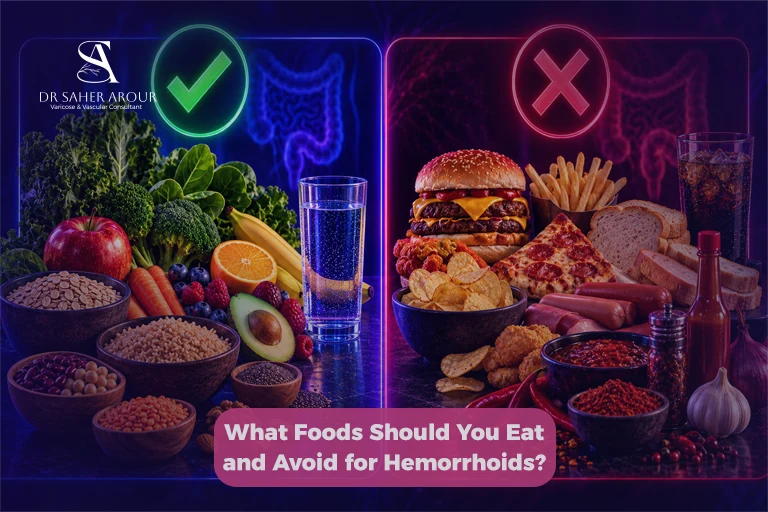
Here is a quick look at how we approach your meals:
| Dietary Approach | How It Helps Your Body |
| Focus on: Fiber & Hydrating Fluids | Softens the stool, making it much easier to pass without painful straining. |
| Limit: Processed & Low-Fiber Foods | Prevents hard stools and stops unnecessary physical pressure on healing veins. |
Why Diet Matters in Hemorrhoid Healing
Your daily diet directly dictates the quality of your bowel movements. To understand why we focus so heavily on specific foods, we have to look at the mechanical causes behind your flare-ups.
How Constipation Triggers and Worsens Hemorrhoids
There’s a direct, physical link between your bathroom habits and hemorrhoid symptoms. In fact, research shows that if you have hemorrhoids, you are more than twice as likely to struggle with constipation [4].
Here is how poor digestion actively worsens your discomfort:
- Straining: Pushing hard instantly increases pressure on those swollen veins.
- Prolonged sitting: Spending too much time on the toilet allows blood to pool in your lower rectum [4].
- Hard stools: When your diet lacks nutrients to keep digestion moving, dry stools create friction that scratches sensitive tissues.
For a deeper look at this, you can read our Constipation and Hemorrhoids article.
How Stool Consistency Affects Healing Time
While a diet change won’t make a difference overnight, it’s good to know that softening your stool is the best way to relieve constant irritation. Clinical trials show that fiber noticeably improves your stool consistency [5], which simply means less friction against those internal veins.
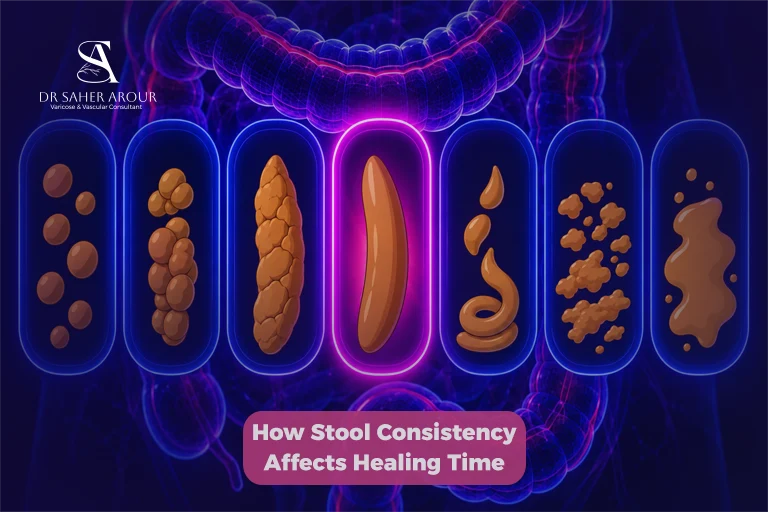
Here is a realistic timeline of what to expect:
- In the short term: You will notice easier bathroom visits, though bleeding and discomfort might not stop immediately [3].
- Within 6 weeks to 3 months: You will typically see consistent, lasting relief as the veins finally get a chance to heal without daily irritation [2].
Three Categories of Foods to Eat Daily
To reduce pressure and bleeding, you need a high fiber diet for hemorrhoids paired with adequate fluids. Here’s how to prioritize your meals.
Category 1: High-Fiber Foods (Whole Grains, Legumes, Psyllium Husk)
Fiber is the most proven dietary change you can make. Data shows it can actually cut your risk of bleeding by half (50%) [2]. In studies looking at internal bleeding hemorrhoids, patients using fiber saw their contact bleeding disappear completely within a few weeks [3].
Here is how to easily get enough of it:
- From your food: Whole grains, oats, and legumes are excellent choices. I strongly suggest incorporating our High-Fiber Diet guide into your routine.
- From a supplement: If food isn’t enough, psyllium husk is highly effective. Taking over 10 grams a day for at least 4 weeks noticeably improves chronic constipation [5].
Category 2: Hydrating Fruits and Vegetables (Pears, Apples, Berries, Leafy Greens)
Clinical guidelines recommend increasing your fiber and fluid intake because it consistently improves mild-to-moderate prolapse (tissue bulging) and rectal bleeding [4].
Hydrating fruits and vegetables for hemorrhoids are incredibly valuable. They naturally provide both the soluble fiber and the water your body needs to form soft, bulky stools that pass easily.
Category 3: Foods Containing Flavonoids and Healthy Fats (Flavonoid-Rich Foods, Citrus, Omega-3)
You might read online that foods rich in flavonoids or omega-3s are standalone cures. While citrus fruits and berries are definitely healthy..
The truth is the medical evidence for using flavonoids specifically to treat hemorrhoids still uncertain [6]. More recent data showed only low-quality evidence for improving bleeding, with no significant effect on other symptoms [7]. Enjoy these foods for their overall health benefits, but don’t rely on them as a magic cure to shrink hemorrhoids.
Three Categories of Foods to Limit or Avoid
It’s important to know what to eat when hemorrhoids bleed, but it’s only half the process. Because you also need to recognize the foods that worsen hemorrhoids by contributing to constipation or irritation like:
Category 1: Spicy Foods That May Irritate Symptoms
Many patients ask if spicy food and hemorrhoids are a dangerous combination. The medical evidence might actually surprise you:
- For the average person: An occasional spicy meal hasn’t been proven to worsen symptoms, so there is no need to panic if you enjoy it [8].
- After a surgery: Context matters. If you are recovering from a recent hemorrhoid surgery, consuming even a small amount (like a teaspoon of chili a day) significantly increases postoperative pain and burning [9].
Simply listen to your body: if spicy foods cause you discomfort, or if you’ve recently had a procedure, just limit them.
Category 2: Low-Fiber and Processed Foods (White Bread, Fast Food, Refined Sugar)
Foods that lack dietary fiber directly contribute to harder stools and the painful straining we discussed earlier. While refined sugar or white bread don’t directly attack your veins, a diet heavy in processed foods replaces the high-fiber meals you actually need. Limiting them helps maintain the consistent bowel habits required for recovery.
Category 3: Alcohol and Excess Caffeine
While there’s no strong evidence proving alcohol or caffeine directly causes hemorrhoids, adequate hydration is a core part of your management [4]. Drinks that dehydrate you simply counteract the water you need to keep your stool soft, making bathroom visits much more difficult.
Sample One-Day Hemorrhoid-Friendly Meal Plan
To help you put this information into practice, here’s a clear hemorrhoids diet plan daily structure. The focus is simply on keeping your fiber intake steady and hydration high throughout the day.
Remember that if you need additional help, you can review our Hemorrhoid Treatment Options article for medical interventions.
| Meal Time | Food Recommendations | Medical Benefit |
| Breakfast | Oatmeal with mixed berries and a large glass of water. | Provides soluble fiber and fluids early in the day. |
| Lunch | Large leafy green salad with beans or lentils. | Increases bulk and moisture in the digestive tract. |
| Dinner | Whole grain rice, cooked vegetables, and lean protein. | Maintains consistent fiber intake without excess processing. |
| Supplement | Psyllium husk mixed in water (if recommended). | Doses over 10g/day for 4+ weeks noticeably improve stool consistency. |
In addition to structuring your meals, I want you to keep these supportive habits in mind:
- Drink fluids steadily throughout the day rather than all at once.
- Don’t ignore the urge to go to the bathroom.
- Avoid sitting on the toilet for prolonged periods.
- Increase your fiber gradually to avoid gas and bloating.
FAQ Section — People Also Ask
What is the best food to eat for hemorrhoids?
A fiber-rich diet, including whole grains, legumes, fruits, and vegetables, helps soften stools and reduce hemorrhoid symptoms.
Is spicy food bad for hemorrhoids?
Spicy food doesn’t appear to worsen hemorrhoidal symptoms for everyone, but some people notice irritation. You can simply limit it if it triggers your symptoms.
How long does it take for diet to improve hemorrhoids?
Improving your fiber intake and bowel habits reduces symptoms over the following weeks. Healing takes a little time, so the improvement isn’t necessarily immediate.
Can drinking water alone cure hemorrhoids?
Adequate fluid intake supports softer stools, but water alone doesn’t cure hemorrhoids. It should always be combined with dietary changes and better bowel habits.
Are bananas good or bad for hemorrhoids?
Bananas can be part of a hemorrhoid-friendly diet, but their effect on bowel movements varies. Your overall fiber intake and drinking adequate fluids are much more important.
References
- [1] The American Society of Colon and Rectal Surgeons Clinical Practice Guidelines for the Management of Hemorrhoids
- [2] Fiber for the treatment of hemorrhoids complications: a systematic review and meta-analysis
- [3] Clinical assessment of dietetic and medical treatment of hemorrhoids
- [4] The American Society of Colon and Rectal Surgeons Clinical Practice Guidelines for the Management of Hemorrhoids (Full CPG PDF)
- [5] Efficacy of dietary fiber in the treatment of chronic constipation: a meta-analysis
- [6] Phlebotonics for haemorrhoids
- [7] Efficacy of micronized purified flavonoid fraction (MPFF) for the treatment of hemorrhoids
- [8] A randomized controlled trial of the effect of spicy meal on hemorrhoidal symptoms
- [9] Effect of chili on post-hemorrhoidectomy pain and symptoms: a randomized, double-blind, placebo-controlled trial