
When you sit for hours on an airplane, it’s normal to feel your blood flow slowing down. But if you already have vein problems, taking care of your varicose veins during long haul flights is a very important step to protect your health. That’s why I advise my patients not to sit still for too long, especially during long-haul flights, as it can increase the risk for venous thromboembolism (VTE), including DVT [1].
In this article, I’ll discuss some key information like:
- What happens to your leg blood flow if you sit in a tight seat for hours.
- Why your health history changes your risk during air travel.
- How simple habits and tools can help in protecting your veins.
- When you should actually worry about leg swelling after a flight.
Table of Contents
Why Flying Is Genuinely Risky for Vein Health
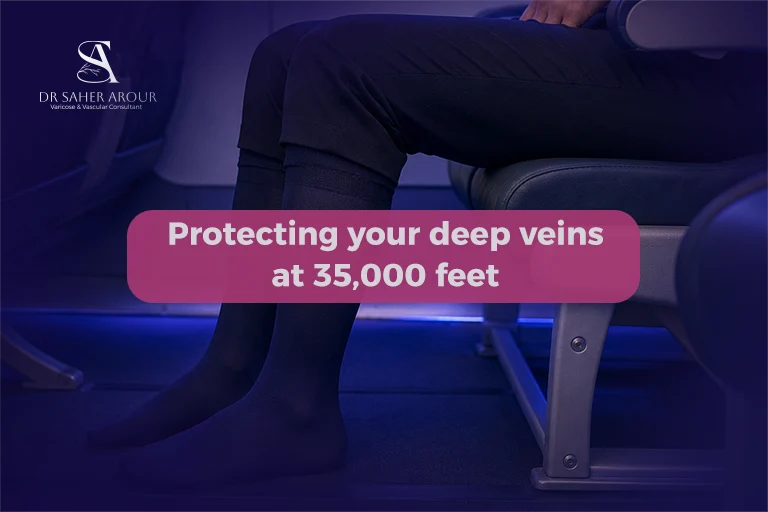
Flying is generally safe, but the cabin environment puts extra stress on your circulation. So the main problem here isn’t the altitude itself.. But the lack of movement, because long periods of sitting during travel cause venous stasis, a contributor to clot formation [1]. To picture what that means, imagine a traffic jam in your veins, so your blood loses its natural upward flow and gathers in your lower legs. Because varicose veins already struggle to move blood efficiently, this pooling effect hits you harder. We sometimes call this economy class syndrome, as the tight seating limits your ability to stretch and walk.
What Happens to Blood Flow During a Long Flight
I always explain this to my patients, because once you understand exactly what your veins go through at 35,000 feet, you can protect them more easily.
Immobility and the Calf Muscle Pump Failure
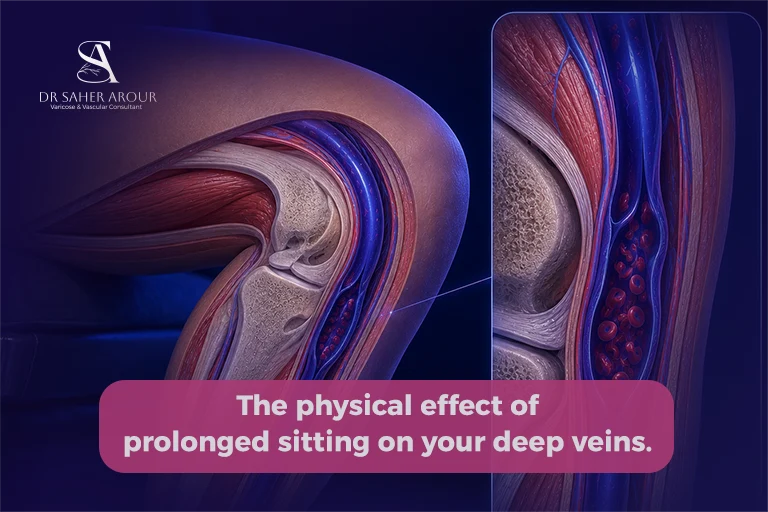
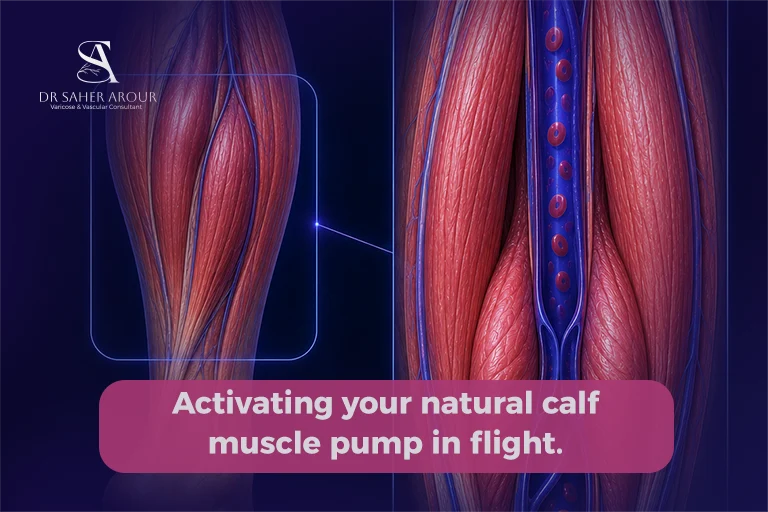
Think of your calf muscles as a second heart. Every time you walk, they squeeze your leg veins and push blood upward. But when you sit in a plane seat, this pump shuts down completely. Consequently, travel longer than 3-4 hours while seated increases blood clot risk in people with additional risk factors [2]. What matters here is, if your calf muscles aren’t helping, your blood relies entirely on one-way valves: valves that might already be weak if you have varicose veins.
Low Cabin Humidity and Dehydration Effects on Blood Viscosity
In addition to immobility, the aircraft environment itself increases the problem, as cabin pressure veins issues are often triggered by the dry air inside the plane. When you breathe this air, you lose your body water and moisture quickly. Dehydration flying veins complications happen because losing body water makes your blood thicker. This slow movement of thicker blood through resting legs increases the chance for clot formation.
Who Is at Highest Risk: Varicose Veins, DVT History, and Other Factors
Not everyone faces the same DVT flying risk. If you have visible, bulging varicose veins, your venous valves aren’t closing properly. This baseline weakness means blood pools much faster in your legs than it does for someone with healthy veins.
If you have a personal or family history of blood clots, the risk gets higher. Other factors may add to your risk profile, like:
- Recent surgery
- Pregnancy
- Taking certain hormonal medications
Due to that, I usually advise my patients to look at their complete health picture, rather than just counting the hours they will be in the air.
The Difference Between Discomfort and Danger: Recognising DVT During or After a Flight
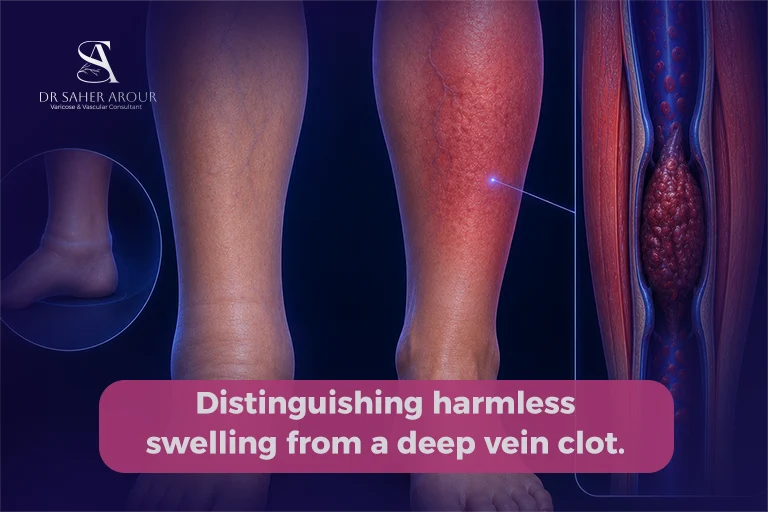
After a long flight, it’s normal to notice some swelling in your ankles if your shoes are tight. Don’t worry, as it’s usually just harmless fluid buildup. However, a blood clot plane flight complication feels and looks very different. If you actually get a clot in your deep veins, mostly, you’ll notice symptoms in just one leg. Also, you might feel a sharp, cramping pain in your calf that won’t go away even with a massage, in addition to the leg becoming swollen, warm, and red. If you notice these signs after landing, please avoid walking and consult a doctor immediately. For your safety, you can also check out our simple guide to spot the signs of DVT in the legs.
Practical Steps to Reduce Risk Before, During, and After Flying
You can manage your vein health while flying, with a few selected habits that can make your legs feel better when you land.
Compression Stockings: Which Grade and How to Wear Them
Compression wear is one of the most effective tools available to protect your legs. I know they are not the most exciting travel accessory, but truly they can save your veins a lot of stress while you sit. Wearing compression stockings on long flights reduces the risk of symptomless deep vein thrombosis [3], as they provide a gentle, continuous squeeze from your ankle upward, literally doing the work your calf muscles normally do. Compression socks also can help lower the risk of deep vein thrombosis and pulmonary embolism during air travel [4]. Just make sure you put them on before you board the plane and keep them on until you reach your final destination.
Movement and Hydration Protocol During the Flight
For sure, you don’t have to do an extensive workout on the plane, but consistent movement is your best defense for travel thrombosis prevention. Movement and leg exercises plus hydration are recommended to reduce thrombosis risk during travel [5]. For example, you can stand up and walk down the aisle every 1-2 hours. While you’re sitting, make sure to do these simple things:
- Firmly point and flex your toes.
- Drink lots of water throughout the flight.
- Try to cut back on coffee and alcohol, since they dehydrate you and force your body to lose more fluids.
Should You Treat Varicose Veins Before a Long Trip?
I hear this question often in the clinic: Should I fix my veins before a major holiday or business trip? To be realistic, if your veins ache daily, or if your legs feel heavy and tired even when you aren’t flying, addressing the root cause will make your travel far more comfortable and naturally drop your overall risk. The good news is that modern procedures are gentle and don’t require long hospital stays. You can review options like Catheter-Based Varicose Vein Treatment to see if treating your veins now makes sense for your upcoming plans.
Frequently Asked Questions
Can you fly after varicose vein treatment?
Your doctor will give you clear guidance based on your specific procedure. Generally, I advise waiting a short period before taking a long flight to allow proper healing and avoid temporary swelling. Always clear your travel plans with your medical team first so you can fly safely and comfortably.
How long is it safe to fly with varicose veins?
Traveling for more than 3-4 hours while seated can rise blood clot risk of blood clots for people with additional risk factors [2]. If your flight is shorter, your risk stays lower. For those longer trips, taking basic, proactive precautions like walking down the aisle every couple of hours makes a massive difference.
Do compression stockings actually prevent clots on flights?
Yes, they absolutely do. Wearing compression stockings on long flights reduces the risk of symptomless deep vein thrombosis [3]. They act as a dedicated physical support system, gently squeezing your legs to keep the blood moving upward when you are stuck in your seat and cannot walk around.
Is it safe to fly with untreated varicose veins?
It is generally safe, but untreated veins mean your valves are already weak. When you combine that baseline weakness with hours of sitting, you need to be proactive. I highly recommend wearing proper compression socks, staying well-hydrated, and actively moving your legs throughout the flight to keep your blood flowing.
References
[1] Deep Vein Thrombosis and Pulmonary Embolism https://www.cdc.gov/yellow-book/hcp/travel-air-sea/deep-vein-thrombosis-and-pulmonary-embolism.html
[2] What can increase a person’s risk for developing blood clots during travel? https://www.premierhealth.com/faq/what-can-increase-a-person-s-risk-for-developing-blood-clots-during-travel-
[3] Compression stockings for preventing deep vein thrombosis in airline passengers https://cam.cochrane.org/air-travel-dvt
[4] Should You Wear Compression Socks on a Plane? https://www.houstonmethodist.org/blog/articles/2024/dec/should-you-wear-compression-socks-on-a-plane/[5] How to Reduce the Risk of Blood Clots During Travel https://reverehealth.com/live-better/how-to-reduce-the-risk-of-blood-clots-during-travel/