
Many people may wonder why their arm or leg still feels heavy and tight, or they feel some swelling, even though they made it through the difficult journey of cancer therapy. If you feel that too, you may be dealing with lymphedema after cancer treatment. I know this symptom can be really annoying, and as a vascular surgeon, my job is to help you relieve and feel better.
Simply, Lymphedema is swelling from lymph fluid buildup [1]. It happens when the normal flow inside your body gets interrupted, leaving that fluid with nowhere to go. In this guide, I’m going to show you exactly what is happening under your skin and how we can help you through:
- Understanding the real cause of your limb heaviness and swelling.
- Learning about the practical steps we take in the clinic to help you manage the condition.
- Knowing what treatment options offer real support for your daily comfort.
Table of Contents
What Lymphedema Is and Why Cancer Causes It
You need to know what is happening when you notice your arm or leg is still swollen for a long time. Medically speaking, lymphedema is swelling due to impaired lymphatic drainage, a chronic condition [2]. To simplify this.. Imagine your lymphatic system works like a quiet plumbing network, moving fluid away from your tissues and back into your bloodstream. So when that network slows down or gets blocked, the fluid simply pools in the area.
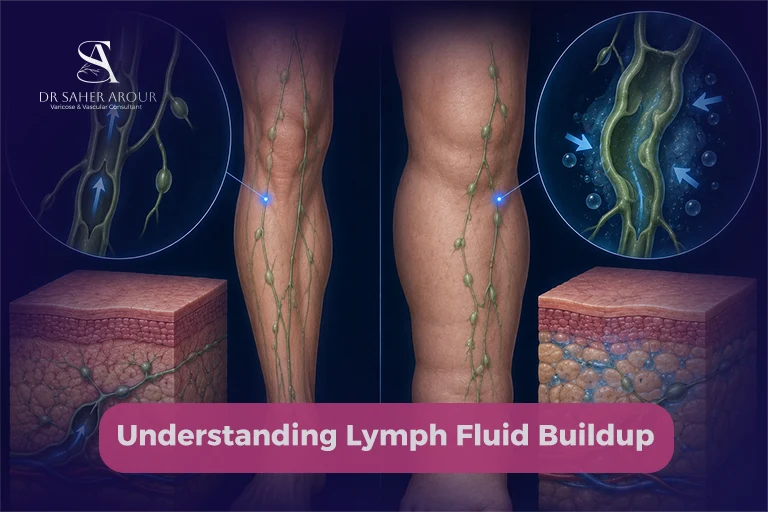
Now you may ask yourself why you only started feeling this after fighting cancer.. In fact, cancer treatment that removes or damages lymph nodes can cause lymphedema [3]. When the nodes are taken out, the fluid loses its natural exit route. And yes, lymphedema is a common delayed effect of cancer treatment and negatively impacts quality of life, but don’t worry because there is always a way to relieve your pain [4].
Although the physical weight of that fluid makes your daily routine harder, understanding the cause gives you the power to take control of your health again.
Why Removing Lymph Nodes Disrupts the Lymphatic System
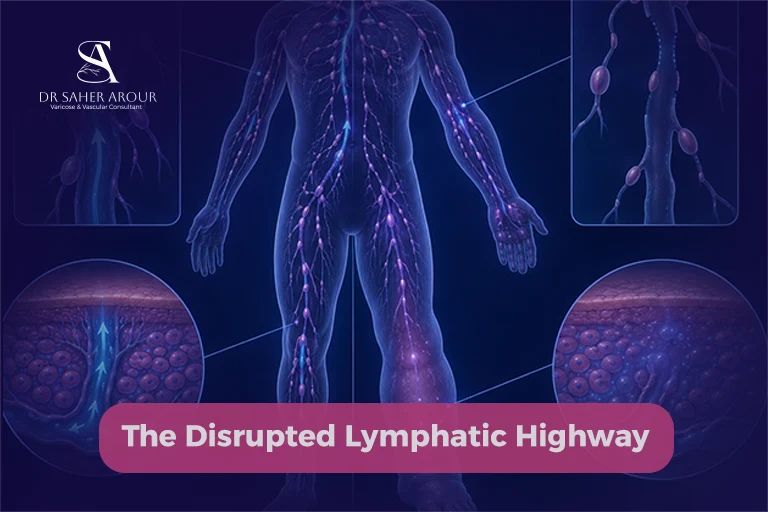
Think of your lymph nodes as specialized filters or connection points along a busy highway. When a surgery removes these nodes to clear out cancer cells, that section of the highway is effectively closed.
In the clinic, when we look at lymph node removal swelling, we see how the body struggles to bypass those closed roads. Because the fluid cannot cross the gap easily, it stays behind in the tissue. This creates a bottleneck, leading directly to the heavy, tight feeling you experience in your limb.
Which Cancers Most Commonly Lead to Lymphedema?
I listen to many patients who have faced different types of tumors. One frequent concern I deal with involves secondary lymphedema breast cancer. It happens because the affected nodes are located in your underarm, which is why the arm and hand on that side often become swollen. Sometimes we also treat patients who had nodes in the groin or pelvis removed for other conditions.
Regardless of your original diagnosis, the result is similar: your lymphatic channels are disrupted, leading to the fluid buildup you feel every day. We take this seriously because we see how much it affects your comfort.
Why Radiation Worsens Lymphedema Risk
After surgery, you might wonder how other parts of your therapy relate to your current symptoms. While surgery directly removes nodes, radiation can change the texture and health of your surrounding tissues. Over time, these changes make it even harder for the delicate lymphatic vessels to do their job.
This adds another layer of difficulty for the fluid trying to find a way out of your arm or leg. That’s why we look closely at your entire medical history to understand exactly what is leading your condition to this.
The Four Stages of Lymphedema: How It Progresses Over Time
It’s natural to worry about your future when talking about the lymphedema stages to understand if things will get worse. Keep calm, because we evaluate your specific situation first, to see exactly where you stand. What you really have to realize is that lymphedema after cancer treatment may develop months or years later [3]. This means you might feel perfectly fine for a long time, only to wake up one day and notice your ring feels tight or your shoes do not fit right.
You need to follow up with your doctor, so your symptoms can be monitored closely. Personally, I listen to your description of the swelling, and notice if it feels soft or if the tissue has started to feel thick and hard, a stage involving fibrosis lymphedema. This hardening means the persistent fluid is irritating the tissues, creating scar-like changes under the skin. These details help us personalize a plan that fits what your body needs right now, and to catch any progression early to keep you moving comfortably.
How Is Lymphedema Diagnosed? Beyond Visual Assessment
When you visit the clinic, we make a real evaluation, not just looking at your arm or leg. This means taking the time to hear your story, noting when the swelling started, and seeing how it changes throughout your day. Then we examine the area gently to feel the texture of your skin.
Some patients remain fearful of the cancer returning. However, not every fluid buildup necessarily means that, so I always make sure to review your medical history, alleviate your fears as much as possible, and confirm the precise cause of the fluid buildup. We rely on careful clinical examination to map out what is happening beneath the surface. By understanding the true nature of the swelling, we make sure we aren’t missing any other vascular issues, ensuring your care plan will fit your situation perfectly.
Treatment Options: What Works and What Doesn’t
To be honest, the right approach for chronic limb swelling treatment requires patience and an individual plan. There’s no single way to handle it for all patients, since each body responds differently to cancer therapy. Our main goal is to reduce the fluid pooling in your tissues so you feel lighter and more comfortable.
So we focus on proven methods to support your body’s natural processes, skipping unhelpful or overly aggressive steps that ignore the root problem.
Complete Decongestive Therapy (CDT): The Evidence-Based First Line
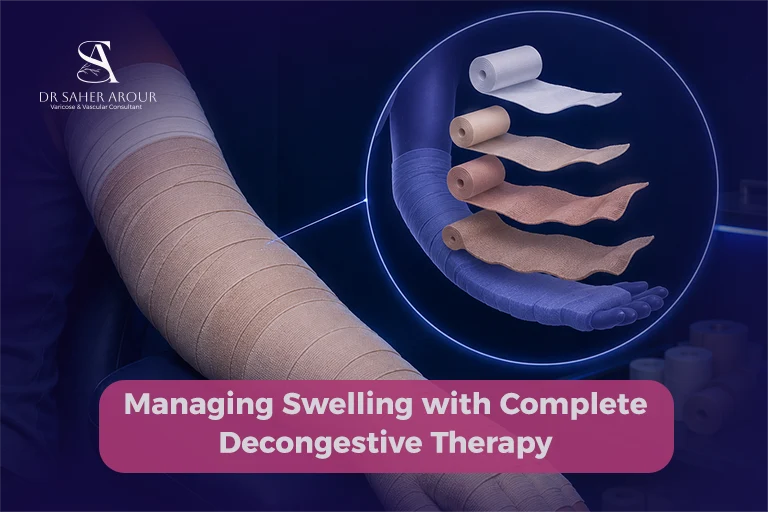
To make sure we apply a safe and effective plan for this condition, we use complete decongestive therapy (CDT), which is the main treatment for lymphedema [5].
Basically, it means using a step-by-step, hands-on way to get the fluid out of your limb. Applying the CDT complete decongestive therapy usually involves gentle skin care,
special massage techniques to help with fluid movement, and wearing specialized garments to maintain the progress. We guide you through each step, to ensure you understand what to expect and how it relieves that stubborn tension.
When Does a Vascular Specialist Become Involved?
You might wonder why a vascular surgeon is part of your care team. Well, the lymphatic system and your blood vessels work closely together. So if your lymphatic system isn’t working properly, vascular experts check out the whole blood flow in your limb.
As a specialist treating lymphedema, Dubai patients often ask me to ensure that no hidden vein or artery issues are affecting their swelling. I assure them that we don’t just look at the symptom, but we check out the whole limb so you get the right care your circulation needs to heal.
Chronic Wound Management for Advanced Lymphedema
If the swelling continues for a long time, your skin can get stretched and fragile, and little cuts might not heal like they should. In my clinic, Lymphedema and Chronic Wound Treatment is a crucial part of what we do. First, we carefully clean and protect any vulnerable areas on your skin, showing you exactly how to avoid infections at home, while managing the swelling and your skin health at the same time. So we protect your limb from painful problems that may occur later.
What Patients Can Do Daily to Slow Progression
While we guide your treatment in the clinic, your daily habits play a huge role in how your limb actually feels. So I recommend these simple steps:
- Keep the skin clean and well-moisturized to prevent cracks that let bacteria in.
- Do simple movements and gentle exercises to help the fluid flow back toward the center of your body.
- Avoid tight clothing or heavy bags that might affect your arm or leg.
Also you have to pay attention to small changes. If your limb suddenly feels hot, looks red, or if the swelling increases rapidly, reach out to your doctor right away. Protecting your arm or leg from extreme temperatures and minor injuries is not a choice, it must become a natural part of your routine in order to feel more comfortable.
Frequently Asked Questions
Can lymphedema be cured after breast cancer treatment?
Lymphedema is a chronic condition, meaning there is no permanent cure. However, using the right management plan and complete decongestive therapy (CDT), we can effectively reduce the swelling. This allows you to regain your comfort and maintain your daily routine without constant heaviness.
How long after cancer treatment does lymphedema develop?
The timeline is highly unpredictable for every patient. Lymphedema after cancer treatment may develop months or years later [3]. Because of this delay, regular monitoring is crucial. Catching the swelling early makes it much easier to manage effectively before it progresses.
Is lymphedema the same as water retention?
No, they are quite different. General water retention can happen to anyone, but lymphedema is specifically a swelling due to impaired lymphatic drainage [2]. This buildup happens directly because your natural lymph pathways were damaged or removed during cancer treatments.
Should lymphedema be treated by a vascular surgeon or an oncologist?
Both specialists are essential for your health. While your oncologist continues to manage and monitor your cancer care, a vascular specialist specifically handles the chronic limb swelling. We evaluate your circulation and ensure your lymphatic drainage is safely supported over time.