When you notice new visible lines or bulges on your legs, it’s natural to wonder what’s happening under the skin. And to understand the spider veins vs varicose veins difference treatment, you have to look at how these issues develop and affect your blood flow.
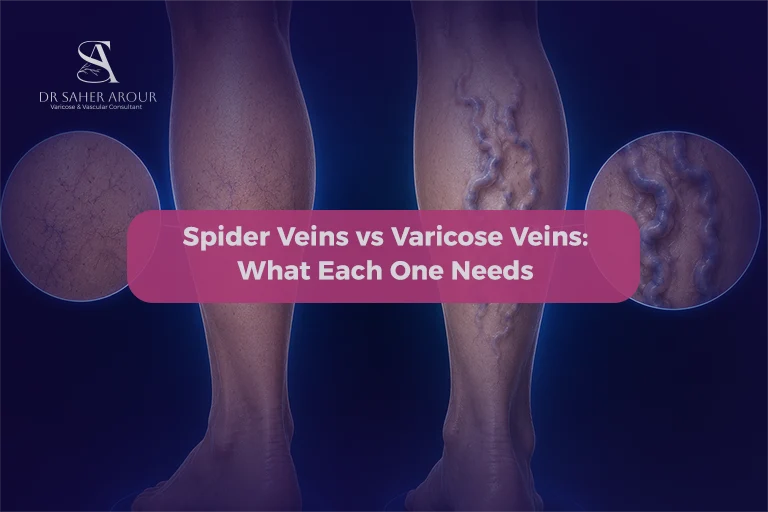
Spider veins and varicose veins are different findings within chronic venous disorders, not just different wording for the same visible vein problem [1]. Telangiectasias, which we usually call spider veins, are less than 1 mm in size, while varicose veins are bulging superficial veins dilated to at least 3 mm [1].
Table of Contents
They Are Different: Spider Veins vs Varicose Veins
To classify vein issues, we use a medical system called CEAP to keep track of their severity. CEAP class C1 includes telangiectasias or reticular veins, and CEAP class C2 includes varicose veins [1]. This helps me build the right plan for you, because spider veins and varicose veins are really different findings within chronic venous disorders, not just different wording for the same visible vein problem [1]. To treat them correctly, we should notice the physical characteristics of each type.
What Spider Veins Are: Telangiectasia and Reticular Veins Explained
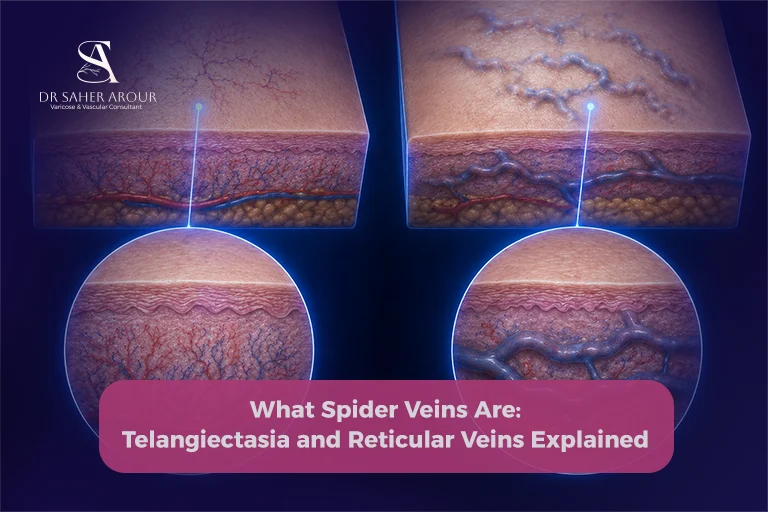
I often use the terms spider veins and reticular veins to describe the small, visible marks that appear on the skin. Telangiectasias or spider veins are less than 1 mm; reticular veins are 1 to 3 mm; and varicose veins are at least 3 mm [1]. They form small networks like a web that sit just under the surface.
Where They Appear and Why
It’s common to find spider veins on the legs, and sometimes they may occur on the face [2]. Some people, especially Dubai residents, ask me about thread veins, and they frequently visit the clinic for a cosmetic vein treatment, in order to feel comfortable when wearing shorts or dresses in the warm weather. I also see a lot of interest in vein laser treatment face procedures to clear up those tiny facial lines. But you have to know that spider veins can have arterial or venous origins [2]. So even though we can spot them easily, spider vein pathogenesis is still unclear; one cited study found venous incompetence in 22.9% of patients with spider veins [2].
Are Spider Veins a Medical Problem or Only Cosmetic?
When you see a sudden cluster of small red or blue lines, you might feel afraid. But from a medical standpoint, spider veins are often cosmetic and rarely cause health issues, but they may occasionally be painful [2]. So when you come in, we usually diagnose spider veins clinically; while imaging may be used if venous insufficiency is suspected [2].
What Varicose Veins Are: The Medical Condition Behind the Visible Vein
It’s clear that varicose veins look and act in a different way than those small surface spider webs. Because varicose veins are not as small as the surface veins, they are bulging, enlarged superficial veins, most often in the legs [3]. They happen when the tiny one-way valves inside your blood vessels stop doing their job. Weak or damaged venous valves can allow backward flow and pooling, causing vein stretching or twisting [3]. That pooled blood puts extra pressure on the vein walls, making them bulge against your skin.
Why Varicose Veins Are Not Always Purely Cosmetic
A bulging vein or varicose veins may be cosmetic, symptomatic, or associated with more serious health problems [3], meaning they are about more than just their look on your legs. You might really feel them after a long day on your feet. But sometimes, varicose veins may be painless or may cause aching/heaviness, burning, throbbing, cramping, swelling, worse pain after prolonged sitting/standing, itching, and skin color changes [3].
In fact, complications are rare but can include ulcers, blood clots, bleeding, and leg swelling [3], which means not everyone will develop severe issues. Also, the medical guidelines are usually clear: you should refer to a vascular service when symptomatic varicose veins, lower-limb skin changes thought due to chronic venous insufficiency, superficial vein thrombosis with suspected venous incompetence, venous leg ulcer, or healed venous leg ulcer are present [4].
When Spider Veins Signal an Underlying Varicose Vein Problem
People often ask me if their small surface veins mean the deeper veins are quietly failing. In order to make sure of that, getting a proper venous insufficiency diagnosis helps us in this case. As I mentioned earlier, diagnosing spider veins is usually done clinically, and we may use imaging if venous insufficiency is suspected [2]. Since one cited study found venous incompetence in 22.9% of patients with spider veins [2], we will check your deeper vein network if your symptoms point in that direction.
Treatment for Spider Veins: What Works
Actually, there are highly effective ways to clear those small surface veins if they bother you. The procedure is simple, but I have to look at telangiectasia treatment options, and check the exact location and size of the veins to pick the safest method for you.
Sclerotherapy: A First-Line Treatment for Spider Veins on the Legs
For small webs on your lower limbs, I recommend using the sclerotherapy spider veins treatment as it’s usually the best approach. In fact, sclerotherapy is considered first-line treatment for spider veins on the legs [2]. So we use an ultrasound assessment, which can identify obstruction, reflux, or incompetence in deep, superficial, feeder, and perforating veins before spider-vein treatment [2].
During the session, the injected solution works directly on the walls of the problem vein. Because sclerotherapy causes inflammation of the endothelium, resulting in fibrosis and occlusion of the treated vein [1], it closes the vein effectively. Sclerotherapy typically applies to small 1 to 3 mm and medium 3 to 5 mm veins or recurrent varicose veins after surgery; no precise diameter alone determines treatment decisions [1]. And for sure, you’ll need a little patience after the procedure. Results for small varicose veins or spider veins are usually seen in 3 to 6 weeks [5].
Treatment for Varicose Veins: Why Sclerotherapy Alone Is Not Always Enough
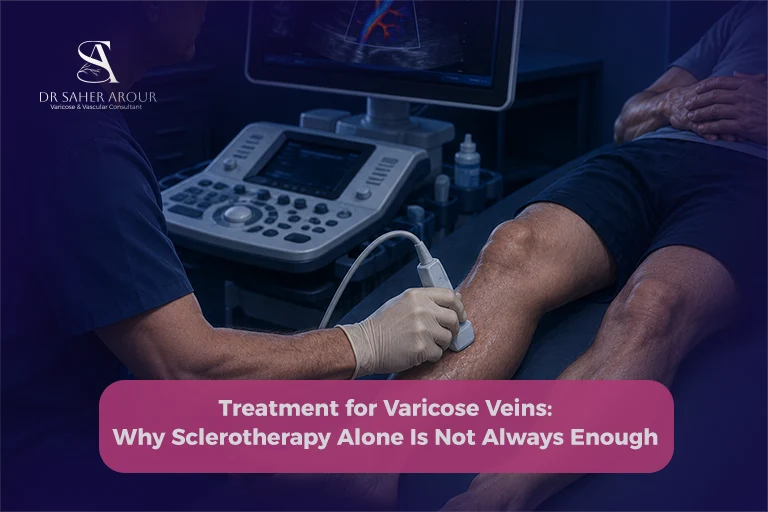
Since varicose veins involve larger vessels and deeper valve failures, they need a more comprehensive way to treat them. A vascular service is a team able to undertake full clinical and duplex ultrasound assessment and provide a full range of treatment [4]. The very first step is usually mapping your blood flow. We use duplex ultrasound to confirm varicose veins, define truncal reflux extent, and plan treatment [4].
Once we know exactly where the backward flow starts, we can offer the right fix for your leg. For confirmed varicose veins with truncal reflux: offer endothermal ablation; if unsuitable, offer ultrasound-guided foam sclerotherapy; if unsuitable, offer surgery [4]. Here in the clinic, a Catheter-Based Varicose Vein Treatment is often part of this process to safely close off the damaged vein from the inside.
Now you may be wondering if you can just wear tight socks to avoid a procedure. The fact is no, because compression hosiery is not a primary treatment for varicose veins unless interventional treatment is unsuitable [4]. You should also know that managing your vein health is an ongoing process. More than one session of treatment may be needed [4], and new varicose veins may develop after treatment [4].
Frequently Asked Questions
Can spider veins turn into varicose veins?
They are part of the same continuum of chronic venous disorders [1], but one doesn’t automatically morph into the other. The exact pathogenesis of spider veins is unclear [2]. One cited study found venous incompetence in 22.9% of patients with spider veins [2], which means underlying valve issues can be present even if you only see small surface lines.
Is sclerotherapy permanent for spider veins?
Treated veins that go away generally do not come back, but new veins can appear [5]. Some people need more than one sclerotherapy treatment; generally wait about six weeks before another session [5]. This gives your body enough time to absorb the closed veins.
Do spider veins need to be treated medically or only cosmetically?
Spider veins are often cosmetic and rarely cause health issues, but they may occasionally be painful [2]. Because they are mostly harmless, treatments focus primarily on appearance. We usually diagnose them clinically, and imaging may be used if venous insufficiency is suspected [2].
Can I treat varicose veins and spider veins in the same session?
If incompetent varicose tributaries are being treated, treating them at the same time can be considered [4]. We’ll look at your ultrasound results to decide if treating both the underlying truncal reflux and the visible surface branches at once is the safest plan for your legs.