rather than general anaesthesia, depending on the procedure and patient factors [1]. I know it’s hard for a lot of people to wake up from deep anesthesia, as it causes unnecessary stress and confusion. And that’s why I focus in my clinics on Artery Replacement Without General Anaesthesia.
Every week I meet patients who fear the recovery process that requires staying in the hospital for a long time. And might think fixing a main artery definitely means deep sleep, large incisions, and weeks of painful downtime. But modern vascular care gives us far better, more choices that respect your body’s limits while treating the underlying blockage effectively.
What you should know right away about fixing your arteries without going completely to sleep is:
- Angioplasty and stenting are minimally invasive options to improve blood flow when an artery or vein is narrowed or blocked [1].
- These specific procedures usually do not require general anaesthesia [1].
- Most angioplasty procedures do not require an overnight stay, though individual planning still depends on your treating doctor [1].
Table of Contents
What is Artery Replacement Without General Anaesthesia Actually Means
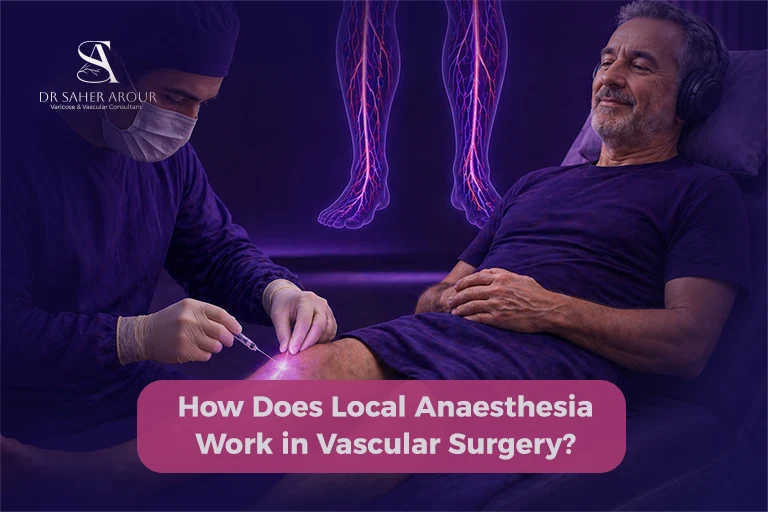
When I talk about restoring your blood flow without heavy sleep medicine, I am usually referring to endovascular artery repair. This is a minimally invasive catheter-based approach done through small artery punctures [2]. Instead of making large surgical cuts that traumatize your muscles and tissue, we work entirely from the inside of your blood vessels. This precise approach is exactly how we can perform vascular surgery without GA.
You stay awake during the procedure, but we numb the exact access spot so you won’t feel any sharp pain. This makes a real difference in your comfort and peace of mind. By avoiding the heavy cardiovascular toll of general anesthesia, your body stays much more relaxed. We do a lot of peripheral artery disease surgery this way today, specifically to help you get back to your family and your normal routine as smoothly as possible.
Why Traditional Artery Surgery Has Often Required General Anaesthesia
In the past, fixing a blocked vessel usually meant open surgery, which involves deep incisions to reach the blood vessels directly [2]. Because of these deep cuts, you had to be completely asleep with a breathing tube just to get through the operation safely.
While open surgery remains a vital tool and is sometimes the safest choice, it is no longer the default for everyone. Today, we provide the full range of therapies, including medical, minimally invasive, endovascular, and open surgeries [3]. Having these options means we can save deep cuts and general anesthesia exclusively for when you truly need them, using lighter, local methods for your arterial occlusion treatment whenever it is clinically safe
How Dr. Saher Performs Selected Artery Replacement Under Local Anaesthesia
Before you even step into the procedure room, we sit down to build a plan tailored to your body and medical history. My goal is simple: improve your blood flow while keeping you as comfortable and safe as possible
Step 1: Assessment and Access
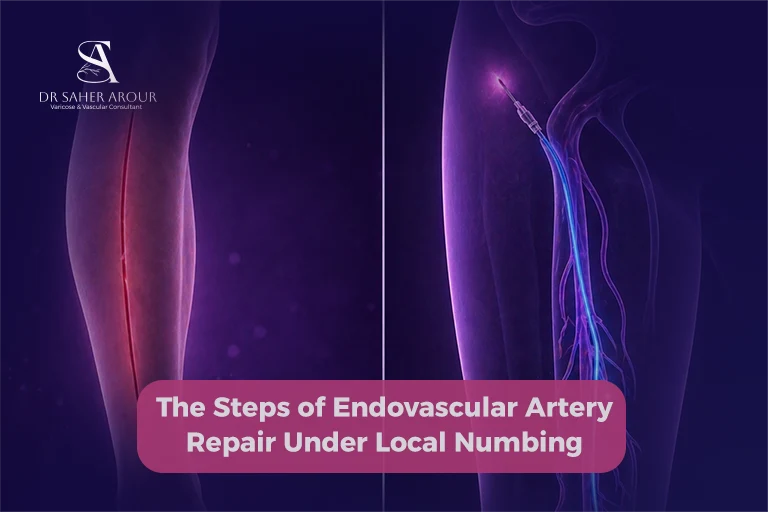
First, we use specialized imaging to pinpoint exactly where the blockage sits. Once you are comfortable in the procedure room, we give you a local numbing shot. You will probably feel a small pinch, but the area goes completely numb right after. We do not make large cuts. Because endovascular repair is a minimally invasive catheter-based approach through artery punctures [2], we often need only a tiny spot, no larger than a grain of rice to enter the vessel safely
Step 2: Crossing the Blockage and Repair
Once inside, I watch a live screen that shows me your blood vessel in real-time. Endovascular repair may use x-ray guidance, a guide wire, and a balloon catheter to cross and open a narrowing or blockage [1]. We gently push the balloon into the tight space and inflate it to press the plaque out of the way. I often place a small metal stent to keep the artery propped open. You stay awake the whole time. You might feel some dull pressure as the balloon inflates, but you should not feel any real pain
Who Is a Candidate for This Technique?

To be completely honest: this minimally invasive approach isn’t for everyone. Suitability for regional or local approaches should be selected based on the case itself; not every patient or procedure is suitable [4].Before we finalize that decision, I need to look closely at your anatomy, the exact type of block you have, and your overall heart and lung health.
High-Risk and Elderly Patients
Sometimes, putting you to sleep is simply too risky for your heart or lungs. When that happens, I focus on avoiding general anesthesia entirely. Here is how this approach protects you:
- Elderly patients and those with underlying respiratory problems may benefit from neuraxial anaesthesia in infrainguinal bypass surgery [4].
- Using neuraxial or regional anaesthesia may allow avoidance of general anaesthesia and short-term benefits in selected vascular surgery contexts [4].
- If you are scheduled for a femoral artery bypass in Dubai but have other serious health issues, this technique gives us a safer path forward without stressing your vital organs.
Patients Needing Urgent Limb Rescue
When severe lack of blood threatens your leg, we act fast. Rest pain, non-healing foot ulcers, wounds, or gangrene should trigger vascular testing to assess blood supply and healing potential [3]. Suspected CLTI requires urgent referral to a vascular surgeon for limb salvage efforts [3].
For Peripheral Artery Disease cases that have reached this critical, limb-threatening stage, revascularization can be endovascular, surgical, or hybrid and is used to prevent limb loss [5]. Doing this limb salvage surgery UAE under local numbing is often the safest way to save your tissue.
Recovery — What to Expect After Artery Replacement Without GA
After the procedure, you wake up clear-headed, skipping the heavy grogginess of general anesthesia. You can usually eat and talk with your family right away. Because most angioplasty procedures do not require an overnight stay, your treating doctor will discuss your specific discharge plan with you [1].
However, internal healing still takes time. We do not claim local or regional anaesthesia always improves long-term recovery [4]. In fact, evidence for long-term benefits of neuraxial or regional anaesthesia in vascular procedures remains limited [4]. An easier hospital day does not replace your work at home. You must rest, take your medications, and follow my exact wound care advice to keep your artery flowing freely.
Frequently Asked Questions
Can artery replacement really be done without general anaesthesia?
Yes. Selected endovascular artery procedures may be performed with local anaesthetic rather than general anaesthesia, depending on the procedure and patient factors [1]. We simply numb the access site instead of putting your whole body to sleep.
Is artery replacement under local anaesthesia suitable for every patient?
No. Suitability for regional or local approaches should be selected case by case; not every patient or procedure is suitable [4]. I must review your specific blockage and overall health first.
What is the difference between open artery surgery and endovascular artery repair?
Open vascular surgery involves incisions to reach blood vessels [2]. In contrast, endovascular repair is a minimally invasive catheter-based approach through artery punctures [2]. This lets me fix the problem from the inside without large cuts.
Why might a vascular surgeon avoid general anaesthesia in high-risk patients?
Heavy anesthesia stresses the body. Elderly patients and those with underlying respiratory problems may benefit from neuraxial anaesthesia in infrainguinal bypass surgery [4]. Skipping general anesthesia directly protects a weak heart or lungs.
Does local anaesthesia mean recovery is always faster?
Not always. You wake up faster, but evidence for long-term benefits of neuraxial or regional anaesthesia in vascular procedures remains limited [4]. Your true healing still depends on your body and the restored blood flow.
When is urgent PAD surgical treatment or limb salvage surgery needed?
When your limb is in real danger. Rest pain, non-healing foot ulcers, wounds, or gangrene should trigger vascular testing to assess blood supply and healing potential [3]. Suspected CLTI requires urgent referral to a vascular surgeon for limb salvage efforts [3].
References
[1] Angioplasty and Vascular Stenting – RadiologyInfo
[2] Endovascular Surgery – Cleveland Clinic
[3] Patients with Chronic Limb-Threatening Ischemia – Society for Vascular Surgery
[4] Neuraxial anesthesia in vascular surgery – SAGE Journals[5] 2024 PAD Guideline Slide Set – American Heart Association