
I know that finding out your varicocele comes back after surgery is frustrating. You went into the surgery expecting a permanent solution, but you ended up feeling that familiar heaviness or seeing the swollen veins return. So, why does this happen? The direct answer is that some hidden or very small veins were likely missed during the first operation, or your body might have a complex network of extra veins that continue to pool blood and cause swelling. This forces the blood to find a new path, creating a new varicocele.
Although surgery works well for many men, there is a probability for the problem to come back again, because the varicocele recurrence rate depends on your unique anatomy and the exact type of procedure you had. I often see some patients in the clinic who feel confused and worried when their symptoms appear again. They want to know what happened and how to fix the problem as soon as possible.
So, I’m going to explain more about this situation in this article. Here is what you need to understand if you are dealing with a recurrent varicocele:
- Your original surgery did not necessarily fail: your body might just have extra veins that were hard to see from the outside.
- Looking into varicocele embolization vs surgery is a common step for repeat treatments, because minimally invasive options can map out the hidden veins.
- A recurrent varicocele can still be treated effectively, often without needing another open surgery.
- Mapping the actual blood flow with medical imaging is the most helpful step before attempting a second treatment.
Table of Contents

How Common Is Varicocele Recurrence?

You might wonder if you are the only one facing this problem. I want to assure you that you aren’t alone in this. Varicocele recurrence rates after repair vary by technique, reported from 0% to 35% [1]. This means that depending on how the original surgery was done, it’s normal that some men will face the veins swelling again. These numbers show clearly that no single surgical method is a perfect guarantee for everyone.
When we look at these numbers, it becomes clear that the way the veins are tied off makes a big difference. Some surgical methods have lower return rates, while others leave a higher chance for the problem to come back. The recurrence happens because the blood simply finds a new route. If the main vein is tied off but smaller pathways remain open, the blood will pool in those smaller pathways, resulting in a return of the swelling and discomfort.
Why Surgical Ligation Fails in Some Cases
To understand why a varicocele returns, we need to look at how surgical ligation works. During surgery, we find the main swollen vein and tie it off to stop the backward blood flow. However, the human body is complicated, and the blood supply to your testicles doesn’t always follow a simple, single path.
Missed Accessory Veins — A Common Reason
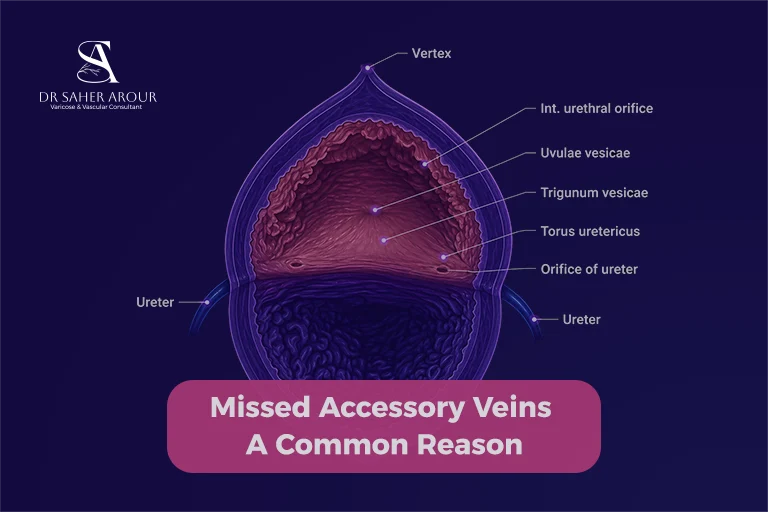
One of the most common reasons for a varicocele after ligation is simply that extra, smaller veins were missed. In fact, collateral gonadal veins are a reported main cause of surgical treatment failure in varicocele patients [2]. Think of these collateral veins as small side streets next to a main highway. If we block the main highway but miss the side streets, the blood just takes a detour. Over time, those tiny side veins stretch out under pressure, bringing the swelling right back. These missed veins varicocele surgery cases show exactly why finding every single pathway is so important.
Collateral Vein Formation After Surgery
Sometimes, it isn’t just about missed veins; it’s about your body trying to adapt and keep the blood moving. After the main vein is closed, the trapped pressure can force other tiny, persistent veins to take over. These veins might have been practically invisible during your first surgery. But over months or years, they expand under the new pressure until they fail to push blood up to the heart properly, leading right back to a swollen network.
Anatomical Variants That Increase Recurrence Risk
We all have slightly different internal wiring. Some men simply have complex varicocele anatomy, meaning they have duplicated veins or unusual connections. If you have this kind of variant, a standard surgical incision might only treat what is clearly visible in that specific spot. If your hidden veins branch off higher up in your abdomen, a standard lower cut won’t reach them, setting the stage for the varicocele to return.
The Case That Illustrates the Problem: Dr. Saher’s 14-Year Infertility Case
Sometimes, I see men who have struggled with fertility issues for years, assuming their varicocele was fully cured after an old surgery. I remember a specific case of a patient who had infertility issues for 14 years. When we finally looked closely at his blood flow from the inside, we found a complex, triple-vein anatomy that had simply bypassed his original surgical site.
And honestly, I share this case with my patients as a great example of why we cannot just guess what is happening inside the body. When a patient has an unusual vein structure, a standard surgery might block one or two paths, but still leave a hidden third path completely open. This causes the blood to continuously pool and the heat around the testicle to remain high, so the fertility problem is still there. That is why seeing the actual anatomy is the only way to catch these unusual patterns and offer real relief.
How Catheter Embolization May Reduce Recurrence Risk
Many patients are afraid to undergo surgery again when a varicocele comes back after the first surgery, which is completely normal. That is why we usually talk about different approaches to the problem. Recurrent varicocele can be managed surgically or via embolization [1]. Embolization is a minimally invasive procedure that uses a tiny tube, called a catheter, to block the bad veins from the inside, rather than cutting from the outside.
Why Venography Before Embolization Can Find What Surgery Misses
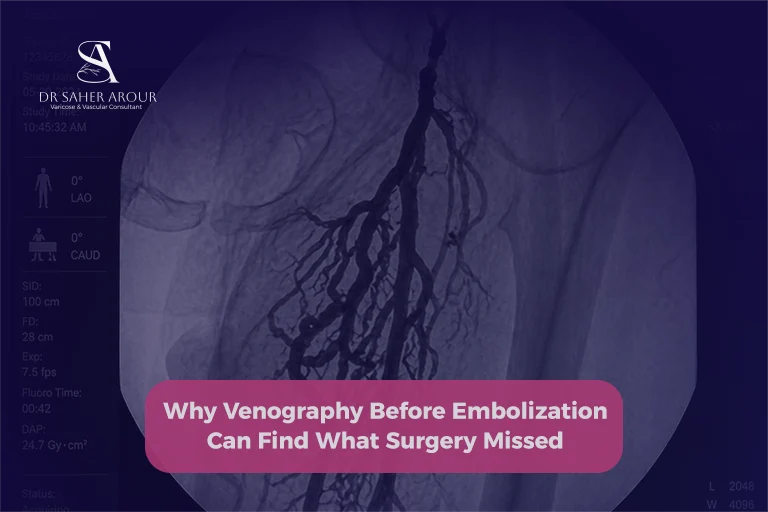
The biggest advantage of embolization is the imaging we use during the procedure, which is called venography. Venography can define the anatomy of recurrent varicocele [1], as it is a special X-ray technique where we use a medical dye to light up the entire vein network on a screen. This allows us to see the exact map of your blood flow in real time. We can spot the main highway, the side streets, and any weird detours. Because we can see the exact layout, we can place tiny coils accurately where the leaks are happening, treating the hidden veins that surgery could not reach.
Can Embolization Be Used After Failed Surgery?
Yes, embolization is an excellent option for selected recurrent cases. Because we enter the vein network from a different location (usually a tiny pinhole in the neck or groin), we do not have to cut through old surgical scar tissue in the scrotum. This makes the recurrent varicocele treatment much smoother for the patient. We simply go beyond the old surgical site from the inside, find the refluxing veins using the venography dye, and block them off cleanly.
What to Do If Your Varicocele Has Come Back
If you have a doubt that your varicocele has returned, the first step is to keep calm. A recurrence does not mean you are out of options or that you have to live with the pain. You should simply schedule an appointment with a specialist who handles complex venous issues. We will review your past surgical history and look at the big picture. Personally, I always prefer to know exactly what kind of discomfort you feel and when it happens. Then, we use an ultrasound to look at the blood flow and get a clear baseline.
Of course, we will listen to your symptoms first, check your current varicocele sperm count after treatment if fertility is a concern, and then discuss the best next steps. Understanding the relationship between your varicocele and male infertility is a big part of your overall health journey. We can discuss your options, including a comprehensive male infertility treatment plan if you and your partner are trying to conceive. You don’t have to worry, because we have the tools to map the problem and fix it together.
Frequently Asked Questions
Can a varicocele come back after surgery?
Yes. Varicocele recurrence after surgery can happen, and the risk varies depending on the surgical technique, your personal anatomy, and whether all refluxing veins were treated successfully. The recurrence rates can range from 0% to 35% [1] depending on these factors.
What causes varicocele recurrence after surgery?
Recurrent varicocele may be related to missed veins, collateral veins, duplicated veins, or complex varicocele anatomy that was not fully treated during the first procedure. The blood simply finds a new route through these untreated pathways.
Are missed veins a common reason for varicocele after ligation?
Yes, missed or persistent collateral veins can contribute to varicocele after ligation, especially when there are accessory or duplicated spermatic veins. These collateral veins are a known main cause of surgical failure [2].
Is varicocele embolization an option after failed surgery?
Yes, varicocele embolization can be used in some recurrent cases after failed surgery, because venography may help map refluxing veins before treatment. The X-ray dye shows exactly where the blood is leaking so we can block it accurately.
Does recurrent varicocele affect sperm count after treatment?
A recurrent varicocele may continue to affect fertility-related symptoms or semen parameters in some men, so repeat evaluation is important if infertility persists. The continued heat and blood pooling can still interfere with healthy sperm production.
How long is the varicocele embolization recovery?
Varicocele embolization recovery is often shorter than open surgery recovery, but return to activity depends on the patient, the technique used, and the treating physician’s instructions. For instance, you can often resume most normal daily activities within 24 hours, but you should avoid heavy lifting or strenuous exercise for one week [3]. Other guidance suggests returning to usual activities after 48 hours if you feel well enough, while avoiding heavy lifting for 48 hours [4].