You have been told you need a specialist, and now you are searching online. That’s why finding the best vascular surgeon in Dubai is not about picking the clinic with the largest building. It is about their hands-on experience and whether their approach matches what your body actually needs. When dealing with heavy legs, severe swelling, or sudden pain, it is natural to feel worried. You need clear answers and safe care.
While many clinics offer vascular care, treatment approaches vary. Some specialists focus on open surgery, which remains the best choice for certain conditions. Others specialize in minimally invasive catheter-based techniques that offer a reliable alternative to a long hospital stay. In this guide, we will walk you through exactly what you need to know before your consultation:
- The real difference between open surgery and minimally invasive endovascular methods.
- Why are specific specialized procedures not available in every clinic?
- The exact questions to ask a surgeon to ensure you get the right care.
- How to spot red flags during your visit to protect your health.
Table of Contents
What Is a Vascular Surgeon: and How Is That Different From a Cardiologist?
Many patients feel confused when their primary doctor refers them to a vascular specialist. You might wonder if you should just go see a heart doctor instead. But there’s a difference between the two fields, actually. A vascular surgeon treats arteries and veins throughout the body except the heart and brain [1]. This means we look at the complex plumbing system that keeps blood flowing safely through your legs, your arms, your abdomen, and your neck.
On the other hand, a cardiologist focuses mainly on the heart [2]. If you have an issue with the valves, the muscle, or the arteries directly inside your heart, you definitely need to see a cardiologist. But if you have blocked arteries in your legs, swollen varicose veins, or an aneurysm in your abdomen, you need a vascular surgeon.
The Two Types of Vascular Surgeons in Dubai: Open vs Endovascular
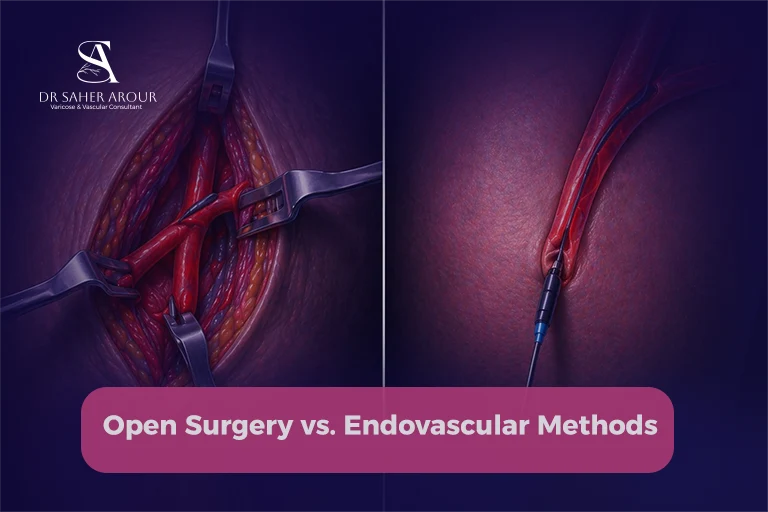
When you research your condition, you might see doctors described as “open surgeons” or “endovascular surgeons.” This makes it sound like two totally different medical fields. But that is not how it works. In reality, vascular surgeons are trained in both open vascular surgery and minimally invasive endovascular procedures [3].A good specialist knows how to perform both safely. However, as they treat patients every day, most doctors naturally focus their practice on just one of these approaches.
Open Vascular Surgery
Open surgery is the traditional method where we make a cut to go directly to the blocked blood vessel and fix it. Hearing the word “surgery” can cause anxiety, and it does require you to stay in the hospital to heal. However, it is still a highly effective and safe option. For some massive or complex blockages, having direct physical access to the vessel is simply the only way to treat it safely. We never rule it out, because your long-term safety is what matters most..
Endovascular / Catheter-Based Surgery: A Modern Option
The word endovascular simply means “inside the blood vessel.” Instead of a large cut, we make a tiny puncture. Catheter-based embolization is a minimally invasive treatment approach[6] that uses small catheters and wires under imaging guidance to reach the target artery [7]. We watch a screen and guide these thin tubes exactly where they need to go, treating the problem from the inside out.
Because this sounds easier, many patients specifically ask for it. But endovascular treatment is not always better than open surgery; the better option depends on the patient and condition [4]. We must check your arteries and overall health first. For example, look at patients with severe peripheral artery disease (PAD) who are suitable for both approaches. If they have a good single-segment great saphenous vein, surgery is actually a better treatment option for them than endovascular therapy [5]. We will always recommend what is safest for your body, not just what is newest.
What Credentials Actually Matter When Choosing a Vascular Surgeon in Dubai
Medical titles and clinic ads can be overwhelming. When you sit in the clinic, you just want to know you are in safe hands. Here is what you should actually look for.
Board Certification and Training Country
A true specialist spends years focusing only on blood vessels. Look for strong, recognized board certifications. For example, a European Board Certification (EBSQ) or a similar national degree proves the doctor passed strict exams in vascular surgery, not just general medicine. It means top experts have tested and approved their skills
Volume of Procedures Performed
Real experience comes from doing the work every day. A doctor who does a specific procedure several times a week simply has better hands-on skills than someone who does it once a year. When discussing your plan, ask the surgeon how often they treat your exact condition. You want a team that knows the steps by heart and is ready for anything.

Does the Surgeon Perform Their Own Diagnostic Ultrasound?
To be clear, in many clinics, a technician does the scan and hands a paper report to the doctor. But some vascular specialists prefer to do the ultrasound themselves while you are in the room. That’s important because it helps them connect what they see on the screen directly to where you feel the pain or swelling. It is always a good sign when a doctor looks at your blood flow with their own eyes to plan your care.
Procedures That Require a Highly Specialised Endovascular Specialist: Not Available Everywhere
Not every clinic offers advanced endovascular treatments because they require high-level training. These procedures need specific imaging tools and specialized catheters. If you need one of these options, you must find a doctor who has the exact expertise to do it safely.
Catheter-Based Hemorrhoid Treatment (HAE)
Hemorrhoidal artery embolization (HAE) is a modern option if you want to avoid a traditional operation. Living with severe hemorrhoids is painful, and the fear of surgery stops many from getting help. Instead of cutting the tissue, we use a different approach. HAE is a minimally invasive endovascular procedure that reduces the blood supply to hemorrhoidal tissue and is performed by an interventional radiologist [10]. HAE is performed by delivering particles and coils through a catheter to reduce hemorrhoidal blood supply [11]. When the blood flow drops, the swollen tissue naturally shrinks, offering you relief without a long recovery
Mechanical Thrombectomy for Stroke
A stroke is an emergency where every single minute counts. When a blood clot blocks blood flow to the brain, it must be removed fast to prevent permanent damage. Mechanical thrombectomy for stroke is a specialized endovascular procedure performed by trained interventional radiologists and other qualified neuro/endovascular specialists [12]. The specialist guides an extremely fine catheter directly into the blocked artery to pull the clot out. This restores blood flow and protects the brain..
Catheter-Based Pulmonary Embolism Treatment
A pulmonary embolism occurs when a blood clot blocks a blood vessel in the lungs. This makes breathing very difficult and drops your oxygen levels. Catheter-based pulmonary embolism treatment can use a catheter to reach the clot in the lung and either break it up or deliver medicine through the tube [13]. This clears the blockage without opening your chest, which is a huge relief when you are already struggling to breathe. Catheter-based pulmonary embolism treatment may require sedating medication [14]. This keeps you relaxed and comfortable while the medical team works. In these serious cases, interventional radiologists perform image-guided minimally invasive procedures without major surgery [15].
Questions to Ask Before Booking a Vascular Surgery Consultation in Dubai
Before choosing your doctor, you should feel completely comfortable asking direct questions. A good surgeon will respect this and give you clear answers. We suggest asking these three things:
- How often do you perform this exact procedure?:This reveals their real hands-on experience.
- Are there minimally invasive options for me, or do I definitely need open surgery?: This ensures you explore all safe paths.
- What happens if things do not go as planned?: A reliable doctor is always honest about the risks and explain exactly how they handle emergencies
Red Flags When Choosing a Vascular Surgeon in Dubai
Pay close attention to how the clinic talks to you. If you feel rushed into a procedure within the first five minutes, take a step back. Any surgery is a big decision that needs careful thought. Another major red flag is a doctor who promises a perfect result with zero risks. Every medical procedure has some risk. A responsible surgeon will sit down, explain the risks honestly, and help you make the right choice for your body. If the clinic feels like a sales office, think again and get a second opinion.
Dr. Saher Arour: Vascular Surgeon in Dubai
Dr. Saher Arour is a Board-Certified vascular surgeon dedicated to providing safe, advanced care. He focuses heavily on clear communication and modern minimally invasive techniques. With deep experience in managing complex conditions, from varicose veins to highly specialized endovascular procedures, his priority is always finding the safest plan for your specific body. Learn more about the Doctor to see how we can help you feel like yourself again.
What is the difference between a vascular surgeon and a cardiologist?
A vascular surgeon treats arteries and veins throughout the body except the heart and brain [1]. A cardiologist focuses mainly on the heart [2]. If you have leg pain or swollen veins, you need a vascular specialist. If you have heart problems, you need a cardiologist.
Is endovascular surgery always better than open vascular surgery?
Not always. Endovascular treatment is not always better than open surgery; the better option depends on the patient and condition [4]. While minimally invasive methods are great, open surgery remains the safest way to fix certain complex blockages.
Do catheter-based vascular procedures always avoid general anaesthesia?
No. Some catheter-based vascular procedures may use local anaesthesia, while others may use general anaesthesia [8]. Endovascular procedures do not all use the same anaesthesia approach; the technique depends on the procedure and clinical situation [9]. We always choose what keeps you safest and most comfortable.
Can all vascular clinics in Dubai offer advanced endovascular procedures?
No. Highly specialized catheter treatments require specific technical training and advanced imaging systems. If your condition is complex, you need a center fully equipped for interventional care.
What credentials matter most when choosing the best vascular surgeon in Dubai?
Look past the marketing. Finding the best vascular surgeon in Dubai comes down to recognized board certifications and a proven daily track record of safely performing the exact procedure you need.
Does it matter if the surgeon performs their own Doppler ultrasound?
Yes, it helps a lot. When your surgeon performs the ultrasound themselves during your visit, they can instantly connect what they see on the screen directly to the symptoms you are feeling, allowing for a much more accurate treatment plan.
References
- [1] What is a Vascular Surgeon? | Society for Vascular Surgery
- [2] Cardiology | Johns Hopkins Medicine
- [3] What is a Vascular Surgeon? | Society for Vascular Surgery
- [4] What is a Vascular Surgeon? | Society for Vascular Surgery
- [5] Patients with good veins should consider surgery, not endovascular therapy | Society for Vascular Surgery
- [6] Embolization | UCLA Health
- [7] Embolization | UCLA Health
- [8] TransCarotid Artery Revascularization | Society for Vascular Surgery
- [9] Abdominal Aortic Aneurysms | Society for Vascular Surgery
- [10] Hemorrhoidal Artery Embolization (HAE) | UCLA Health
- [11] Hemorrhoidal Artery Embolization (HAE) | UCLA Health
- [12] Society of Interventional Radiology publishes updated stroke training guidelines
- [13] Pulmonary Embolism | MedlinePlus
- [14] Pulmonary Embolism | MedlinePlus
- [15] Pulmonary Embolism Health Care Team | American Heart Association