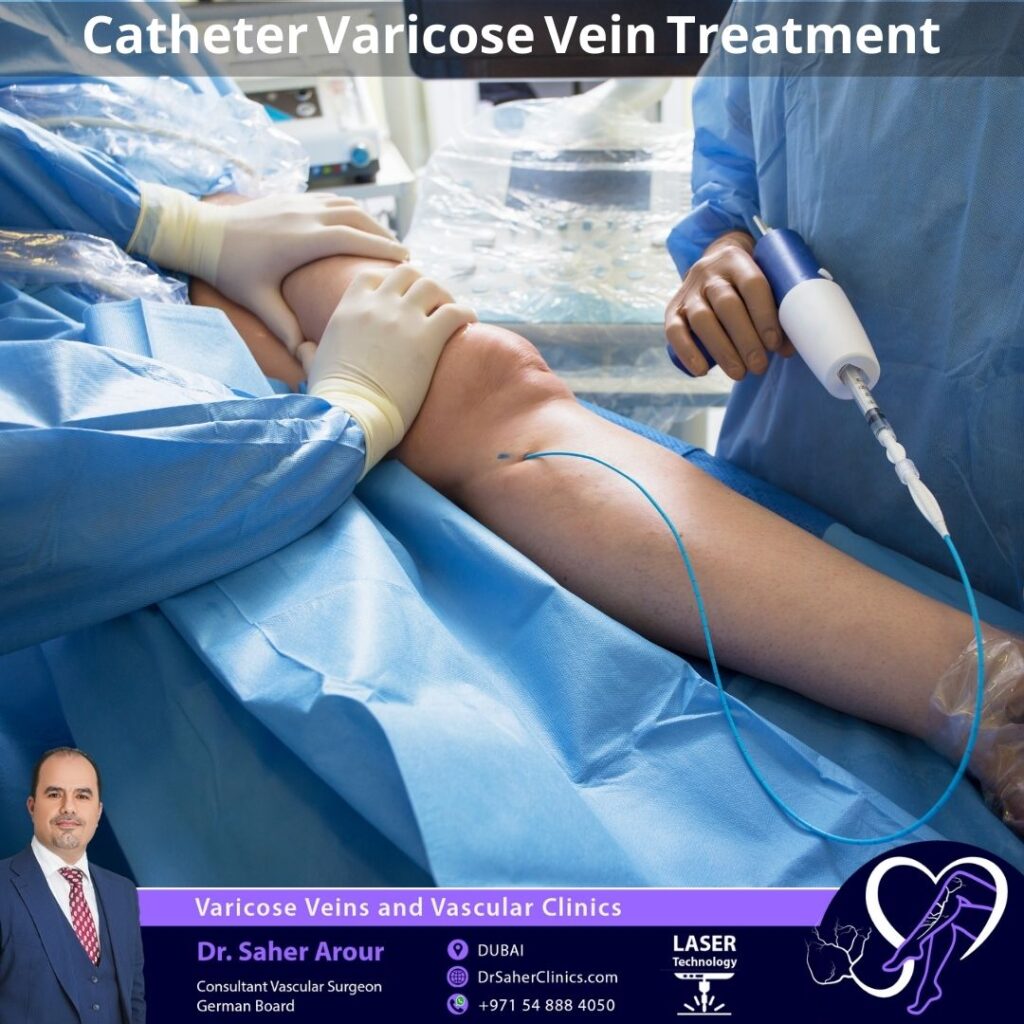
Catheter-based procedures implement laser or radiofrequency to treat Varicose Veins. Catheter-based treatment is used to address large varicose veins. A catheter is a thin, flexible tube that is inserted into a vein, followed by the insertion of a slightly larger tube containing a device, such as a laser or radiofrequency emitter, to reach and treat the varicose area. The emitter can utilize either laser or radiofrequency techniques.
This treatment differs from laser therapy for varicose veins, which is performed externally on the skin without incisions or wounds. You can find more details about laser treatment in this link.
Additionally, Dr. Saher has developed an innovative catheterization treatment for hemorrhoids and has performed these procedures in Dubai hospitals.
Varicose Veins suits Catheter-based treatment
Varicose Veins areas
Varicose veins in the following areas can be treated with catheter-based techniques:
- Legs and Thighs: Whether varicose veins are located in the superficial or deep veins of the legs and thighs, this technique offers an effective solution for their elimination.
- Ankles and Feet: Whether varicose veins appear in the superficial blood vessels of the ankles and feet or in the deep veins, catheter-based treatments using radiofrequency and laser are effective methods for treatment.
Varicose Veins Specifications
Varicose veins suitable for catheter-based treatment typically include the following common specifications:
- Large Venous Varicosities: This includes large veins suffering from dilation and swelling, which work to return blood from the extremities to the heart. These varicosities can be visible and cause troublesome symptoms such as pain and swelling.
- Deep Venous Varicosities: These varicosities involve deep veins located within the muscles and deep tissues. Treating these varicose veins may require laser catheterization to improve blood flow and reduce associated symptoms.
- Recurrent Varicose Veins: In some cases, varicose veins reappear after traditional treatments like surgery or laser ablation. In such cases, catheterization with laser can be used to treat recurrent varicose veins and prevent their return.
However, Dr. Saher determines the most suitable treatment method after examination, tests, and consultations with the patient.

Details of Catheter-Based Varicose Vein Treatment:
During this procedure, a thin catheter is inserted into the affected vein, and then radiofrequency and laser energy are introduced to precisely heat the damaged blood vessels. The treatment is carefully directed to eliminate varicose veins without affecting the surrounding natural tissues.
Benefits and Results of Catheter-Based Varicose Vein Treatment:
When undergoing catheter-based treatment with radiofrequency and laser therapy, you can expect several positive outcomes, including:
- Effective elimination of varicose veins and improvement in the skin’s appearance.
- Reduction of pain and discomfort associated with varicose veins.
- Enhancement of blood circulation and restoration of normal vascular function.
Places for Varicose Vein Catheter-Based Treatment:
The procedure for catheter-based treatment of varicose veins is conducted in a well-equipped and sterile operating room. The best facilities for this can be found at Dr. Saher’s clinics, specialized in varicose vein treatment in Dubai. These clinics have a qualified medical team and modern equipment that contributes to achieving excellent results.
Complications and Risks:
Although the catheter-based treatment with radiofrequency and laser is considered a safe and effective procedure, it may rarely lead to some complications such as temporary swelling or minor scars. Dr. Saher closely monitors the patients’ conditions, providing the necessary guidance and care to avoid any potential complications.
Consult our specialist in varicose vein treatment with catheterization and laser to assess your condition and determine the appropriate plan for you. We are here to provide support and necessary care at every step of your journey to eliminate varicose veins and restore the health and beauty of your limbs.
Q & A about Catheter Treatment
Q1: What is catheter-based treatment for varicose veins?”
Answer: Catheter-based treatment for varicose veins is a procedure that involves inserting a thin catheter through the skin into a vein and directing it toward the varicose vein for treatment. The catheter can utilize various techniques to address varicose veins, such as laser or radiofrequency.
Q2: What are the benefits of catheter-based varicose vein treatment?”
Answer: Catheter-based varicose vein treatment offers several benefits, including improving the appearance of varicose veins, reducing associated pain and swelling, and restoring normal blood circulation.
Q3: Is catheter-based treatment for varicose veins safe and effective?
Answer: Yes, catheter-based treatment for varicose veins is considered a safe and effective procedure for many patients. The procedure is carefully guided to minimize risks and promote a speedy recovery.
Q4: How long is the recovery after catheter-based varicose vein treatment?
Answer: Patients typically require a short period of rest following catheter-based varicose vein treatment. This recovery period can range from 1 to 2 days before resuming regular daily activities. It’s important to follow the treating physician’s instructions and adhere to necessary care to facilitate a quick recovery.